• العربية
  • پښتو
  • فارسی
Brand
  • Afghanistan
  • Sport
  • Markets
  • Afghanistan
  • Sport
  • Markets
  • Theme
  • Language
    • العربية
    • پښتو
    • فارسی
  • Afghanistan
  • Sport
  • Markets
All rights reserved for Volant Media UK Limited
volant media logo

Taliban Education Minister Backs Supreme Leader As Haqqani Criticises Rule By Fear

Dec 13, 2025, 14:08 GMT+0

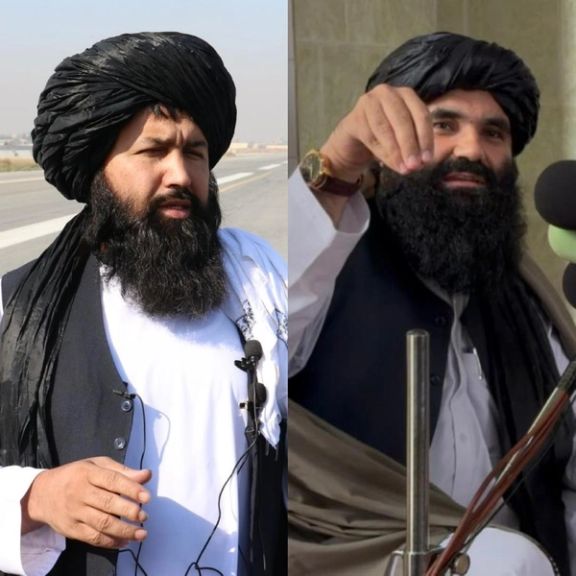
Neda Mohammad Nadeem, the Taliban’s minister of higher education, has warned that disobedience to Taliban leader Hibatullah Akhundzada would weaken the authority of the regime. He said that in an Islamic system there can be only one leader who must be obeyed by all.

Addressing young Taliban members on Friday during a speech at a religious school in Paktia province, Nadeem said that the existence of “multiple amirs” would lead to corruption and the failure of the system. He urged Taliban members to follow Akhundzada’s orders without question.

Nadeem, regarded as a close and trusted associate of Akhundzada in Kabul, made the remarks on the same day that Sirajuddin Haqqani, the Taliban’s interior minister, publicly criticised the leadership’s treatment of the population in Khost province.

Speaking in Khost, Haqqani criticised what he described as a Taliban “government of fear and intimidation.” He said that while the Taliban had once been oppressed by the “emperors of the world,” they now showed little tolerance themselves.

Haqqani urged Taliban officials to treat the population in a way that would reduce hostility and resentment, warning that governance based solely on fear could not succeed.

Afghanistan’s National Radio and Television later released an audio recording of Nadeem’s speech, in which he called on Taliban forces not to oppose Akhundzada or attempt to establish another self-appointed leader. He said Taliban members must obey orders to serve in any “fort,” “district” or “army unit” when instructed.

Without naming any individual or faction, Nadeem stressed that no one should regard themselves as an “amir” or act independently. He reiterated that in what he called the “Islamic system,” there is only one amir, and all must obey him. He concluded by urging Taliban members to be ready to sacrifice their lives and property to defend the system.

Supporters of Sirajuddin Haqqani often refer to him using the title “Khalifa,” while official Taliban texts describe Hibatullah Akhundzada as Amir al-Mu’minin, a title that emphasises absolute obedience. In Islamic terminology, a Khalifa is traditionally seen as a successor to the Prophet in political and social governance, while Amir al-Mu’minin denotes a leader of the faithful with both religious authority and political power.

Public disagreement between Haqqani and Nadeem is not new. In December 2024, the two ministers clashed verbally during a graduation ceremony at a religious school in western Kabul.

At the event, Nadeem sharply attacked Taliban critics, calling them “enemies of God, enemies of the Islamic system, slaves of infidels, apostates and unbelievers,” and argued that only religious scholars could confront them.

When Haqqani later addressed the gathering, he struck a markedly different tone, saying it was inappropriate to use harsh language against the population or to label people as corrupt. He said an Islamic system has a responsibility to guide those who go astray and warned that corruption and disbelief would arise from the authorities’ own “narrow-mindedness and weakness.”

In those remarks, Haqqani indirectly criticised the Taliban leadership’s approach to governance, highlighting ongoing internal tensions within the movement.
Most Viewed

Taliban Ignore Afghanistan’s Interests By Backing Militants, Says Pakistan Army Chief
1

Taliban Ignore Afghanistan’s Interests By Backing Militants, Says Pakistan Army Chief

2

United Nations Delivers Education Kits To Four Million Afghan Children

3

Taliban Renews Call For China To Launch Aynak Copper Mine

4

Taliban Leaders In South-West Hold Security Meet In Kandahar

5

Afghan Deportations Is Strategic Mistake, Says European Parliament Member

•
•
•

More Stories

Will Not Attend Regional Tehran Meeting On Afghanistan, Says Taliban

Dec 13, 2025, 12:41 GMT+0

The Taliban’s Ministry of Foreign Affairs said on Saturday it will not take part in a regional meeting on Afghanistan scheduled to be held in Tehran. Zia Ahmad Takal, deputy spokesperson for the ministry, said the Taliban had received an invitation but decided not to attend.

According to Takal, the decision was based on the Taliban’s view that Afghanistan already maintains active relations with regional countries through existing regional organisations and cooperation frameworks, and has made what he described as significant progress in this regard.

Tehran is set to host the regional meeting on “developments related to Afghanistan” on 16 and 17 December. One of the key issues on the agenda is reducing tensions between the Taliban and Pakistan.

The meeting is expected to be attended by special representatives from Pakistan, Tajikistan, Uzbekistan, Turkmenistan, China and Russia.

On Thursday, Iran’s Foreign Ministry spokesperson Esmail Baghaei told reporters: “The Islamic Republic of Iran attaches fundamental importance to security and stability in its neighbourhood and, in this context, will spare no effort to reduce tensions among regional countries and strengthen mutual understanding.”

Referring to recent tensions between the Taliban and Pakistan, Baghaei added: “We hope this meeting can play an effective role in promoting convergence and easing tensions.”

The meeting comes amid a sharp deterioration in relations between the Taliban and Pakistan. Since clashes erupted between the two sides, Iran has repeatedly called for mediation and de-escalation, but neither party has so far responded substantively to Tehran’s efforts.

A day earlier, Iran’s representative to the United Nations expressed concern about the expansion and activities of terrorist groups in Afghanistan, saying Iran is “directly and immediately” affected by developments in the country. He warned that “without the formation of an inclusive national government, conflict in Afghanistan will intensify.”

Ahead of the meeting, Iran also facilitated discussions among Afghan opposition political groups, resulting in a joint statement known as the “Unity of Afghan Political Parties and Movements.” Encouraged by Tehran, the groups issued a declaration calling for the resolution of Afghanistan’s crisis through political dialogue.

Rights Activists Urge Arrest Of Taliban Leader, Court Chief At Spain Conference

Dec 13, 2025, 11:37 GMT+0

Human rights defenders attending the third special conference on Afghan women in Spain have called for international action to arrest Taliban leader Hibatullah Akhundzada and Abdul Hakim Haqqani, head of the Taliban’s Supreme Court.

The conference, held on Friday, 12 December, and hosted by Spain’s Ministry of Foreign Affairs in Madrid, highlighted that Afghanistan ratified the Convention on the Elimination of All Forms of Discrimination Against Women (CEDAW) in 2003 without reservations and is therefore legally bound to uphold and implement its provisions.

Participants said that more than four years after the Taliban’s return to power, the group’s policies have led to the systematic exclusion of women and girls from public, educational, professional and political life. They stressed that, given the Taliban’s refusal to engage meaningfully with international demands, concrete legal action at the global level is now required.

In July, the ICC issued arrest warrants for Akhundzada and Abdul Hakim Haqqani on charges of crimes against humanity linked to the systematic repression of women. The move was described as part of broader efforts to ensure justice and accountability for human rights violations in Afghanistan.

Conference participants emphasised that enforcement of the warrants would not be possible without practical cooperation from governments.

Citing credible United Nations reports, speakers said there is clear evidence of segregation and the systematic exclusion of women and girls from public life in Afghanistan a situation the UN special rapporteur has described as amounting to crimes against humanity and gender apartheid.

The conference also urged governments to support the formal recognition of gender apartheid as a distinct crime against humanity under international law.

Participants warned that without sustained political will, sufficient financial support and the meaningful participation of victims, accountability efforts would fail and impunity for serious human rights violations would continue.

Taliban Publicly Flog Man & Woman In Nangarhar Province

Dec 13, 2025, 11:02 GMT+0

The Taliban Supreme Court said on Saturday, 13 December, that a man and a woman were publicly flogged with 30 lashes each in Nangarhar province on charges of extramarital relations.

In a statement, the court said the punishment was carried out by a Taliban primary court in the Sherzad district of Nangarhar.

According to the statement, Taliban judicial and local officials, as well as local residents, were present during the flogging.

No details were released about the identities of those punished or the judicial process that led to the sentences.

The Taliban routinely detain and publicly flog individuals on a range of charges. The group describes the public enforcement of corporal punishment and executions as the “implementation of Sharia law.”

Over the past four years, hundreds of people have been publicly flogged, and at least 11 people have been executed. The most recent execution took place five days ago at Khost city stadium, where the Taliban said about 80,000 people were present to witness the execution.

Rule By Fear & Force Is Not Legitimate Governance, Says Haqqani

Dec 12, 2025, 18:03 GMT+0

Sirajuddin Haqqani, the Taliban’s interior minister, said in Khost on Friday that a government which rules people through “fear and force” is not a real government. He implicitly acknowledged that the Taliban relies on humiliation, violence and intimidation in its governance.

Addressing a gathering of local residents, Haqqani said people should not humiliate or condemn one another. “A government that controls people only by frightening them is not a government,” he said. “Between the people and a good government, there must be a bond of affection and trust.”

He added that a government has meaning only when it provides peace, justice and an atmosphere of trust for the population.

For more than four years, the Taliban have suppressed public protests with force and detained critics. The group has carried out public floggings and executions, actions that human rights organisations have sharply criticised as part of what they describe as widespread repression and a suffocating environment in Afghanistan.

Haqqani said Afghans have suffered for years because of their desire for freedom and independence. “The suffering and pain of Afghans have been because they refused servitude and sought independence and freedom,” he said.

In another part of his speech, Haqqani said: “Once, we were oppressed by the emperors of the world, but now we ourselves have so little tolerance that we condemn and humiliate people. This must stop. We should treat people in a way that removes hostility and enmity.”

Germany To Reject Resettlement Of 640 Afghan Refugees In Pakistan

Dec 12, 2025, 15:58 GMT+0

Germany’s Interior Ministry has announced that it will not relocate a number of Afghan refugees currently in Pakistan, reversing earlier commitments.

Ministry spokesperson Sonja Kock said some Afghan refugees will soon be informed that there is no longer any political justification for accepting them.

German media reported that, under the ministry’s new decision, the resettlement process for at least 640 Afghan refugees in Pakistan will be cancelled.

Around 1,800 Afghan refugees who fled to Pakistan after the Taliban takeover and applied for resettlement in Germany because they feared persecution remain in the country. The German government had previously promised to accept them.

According to Deutsche Welle, at least 130 Afghan refugees in Pakistan have already received letters informing them that their acceptance into Germany has been revoked. The letters were sent by GIZ, Germany’s development agency.

The letter states: “After further detailed examination, it has been decided that there are no grounds for granting admission to Germany under Section 22 of the Residence Act.” The notice does not explain why the earlier pledge of acceptance was withdrawn.

Reports say many of those affected previously worked as local staff on German-funded projects before the collapse of the former Afghan government and the Taliban’s return to power.

The Interior Ministry spokesperson said that among the remaining 220 former local employees, 90 are still eligible to apply for admission.

Germany’s previous government, a coalition of Social Democrats, Greens and Liberals, had pledged to admit women’s rights activists, lawyers, journalists and other Afghan dissidents through the so-called “human rights list” and “bridge list.”

That government relocated several Afghan women’s rights activists, lawyers, journalists and political opponents of the Taliban under special programmes. However, the current government under Chancellor Friedrich Merz has said it intends to restrict refugee resettlement programmes as much as possible.

According to official figures, from the Taliban takeover until April 2025, Germany admitted about 4,000 former Afghan local employees and nearly 15,000 of their family members.