Malnutrition Among Mothers & Children Is Rising In Afghanistan, Says WFP
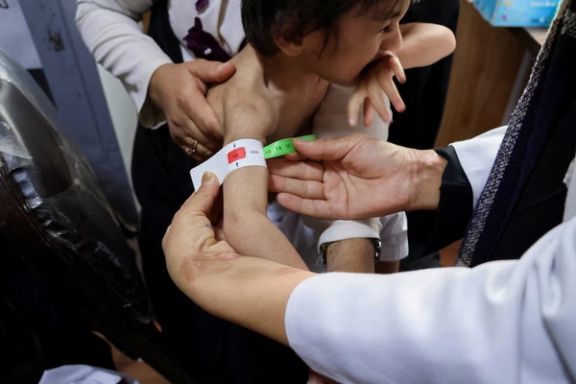
The World Food Programme says malnutrition among women and children in Afghanistan is increasing, with growing numbers seeking treatment at health centres each day.
The World Food Programme says malnutrition among women and children in Afghanistan is increasing, with growing numbers seeking treatment at health centres each day.
The agency said it has provided nutritional assistance to thousands of malnourished women and children across the country in cooperation with partner organisations.
In a post on X on Sunday, the World Food Programme thanked donors for their support, saying continued assistance is vital to ensuring a healthy future for Afghan mothers and children.
The WFP has previously warned that Afghanistan ranks fourth globally for acute child malnutrition. It estimates that about five million mothers and children are currently affected, with the crisis continuing to worsen.
The agency has also cautioned that more than 17 million Afghans face severe food insecurity as winter approaches, a situation closely linked to rising levels of acute malnutrition.
According to WFP data, hunger has increased compared with last year, with an additional three million Afghans now at risk of acute hunger.
The malnutrition crisis has been compounded by a sharp drop in funding, with the agency’s deputy director saying WFP support has fallen by about 80 percent this year.

Iranian authorities say security forces have rescued more than 2,000 Afghan migrants who were stranded by heavy snowfall and freezing temperatures in border areas between Iran and Afghanistan.
Hojat Sediqi, the prosecutor of Taybad county in northeastern Iran, said Iranian forces rescued 2,106 Afghans who had entered the country “illegally.” He said the migrants were later handed over to the Taliban.
Sediqi said the migrants were trapped in remote border areas during severe snowfall and sub-zero temperatures and were identified by Iranian armed forces stationed in the region before they moved further into the country.
Iran’s Mehr News Agency quoted Sediqi as saying the migrants received medical treatment and welfare assistance after suffering from cold exposure and frostbite.
The announcement comes amid reports of Afghan migrant deaths along the same route. On December 19, sources in Herat told Afghanistan International that a group of Afghan migrants travelling to Iran had died on Iranian soil during a severe cold wave. According to the sources, the bodies of at least 15 people were transferred to the districts of Kohsan and Adraskan in Herat province, with some reports suggesting the death toll could be much higher.
Mohammad Yousuf Saeedi, spokesperson for the Taliban governor in Herat, confirmed the deaths of three Afghans at the Kohsan border, saying they died from exposure to cold weather.
Iranian authorities have not commented publicly on reports of Afghan deaths along the route.
Sources told Afghanistan International that as temperatures dropped, hundreds of Afghans attempted to cross into Iran from the districts of Ghorian and Kohsan in Herat. During periods of heavy snowfall, reduced border surveillance often leads some migrants to attempt irregular crossings, the sources said.
International organisations say rising poverty, unemployment and worsening food insecurity in Afghanistan driven by drought and a sharp decline in international aid are key factors pushing Afghans to migrate irregularly to neighbouring countries.
The Taliban Supreme Court said 17 people were publicly flogged in Kunar province after being convicted on charges including drug use and same-sex relations between men.
In a statement issued on Sunday, the court said the individuals received between 10 and 39 lashes and were also sentenced to one to two years in prison.
Human rights groups and international organisations have repeatedly condemned public corporal punishment and the torture of detainees as violations of human dignity and international law, calling for an end to such practices. The Taliban have rejected the criticism, saying they are enforcing what they describe as Islamic sharia.
In the absence of recognised judicial institutions and due process safeguards, the Taliban routinely announce the imposition of corporal punishments. Rights groups say the Taliban’s judicial system falls short of international standards and that defendants are denied basic guarantees, including access to legal counsel.
A recent report by the United Nations said that between August 1 and October 31 the Taliban flogged at least 215 people including 44 women and 171 men across Afghanistan.
At the same time, the head of the Taliban court’s criminal division in Kunar claimed that “no injustice or abuse is committed against prisoners.”
The statement contrasts with findings previously reported by Afghanistan International, which said an investigative report documented at least 31 methods of torture used in detention facilities run by the Taliban’s intelligence directorates in Kabul and other provinces. Alleged abuses include electric shocks, the removal of fingernails, attaching heavy objects to genitals and suspending detainees by their hands and feet.
The George W. Bush Presidential Center has criticised the suspension of admissions for Afghan migrants who worked with the United States.
The Center stated that tens of thousands of Afghans put their lives at risk over two decades by cooperating with the US and its international allies.
In a statement, the Bush Center said turning away Afghans who assisted the United States runs counter to American values.
The criticism follows a shooting by Abdulrahman Lakanwal, a former Afghan soldier, involving members of the United States National Guard in Washington. In the wake of the incident, the Trump administration halted the granting of asylum and citizenship to migrants from Afghanistan and several other countries.
Lakanwal, who was relocated to the United States in 2021 under the Operation Allies Welcome programme along with his wife and five young children, has been charged with first-degree murder in the killing of a National Guard service member.
The Bush Center stressed that the shooter alone is responsible for his actions and that others should not be punished as a result. It added that, like many Americans, Afghans particularly those resettled in the United States are outraged by the shooting.
Following the incident, the United States suspended immigration applications from Afghanistan and several other countries. The Bush Center said the decision means Afghans who assisted the United States but remain stranded in Afghanistan will not be issued travel visas, while the cases of thousands of refugees already in the country will be re-examined.
The statement said officials should focus on what could have been done to prevent the attack, rather than targeting Afghans as a group. It noted that US immigration policies have long required reform and that revisiting vetting procedures could form part of that effort.
The Bush Center said the United States should remember that one of its defining strengths is its history of offering refuge to the poor and the oppressed. It added that America’s values and commitment to freedom are why many Afghan men and women, following the September 11, 2001, attacks, took great risks to stand with the United States and continue to seek a free and just future for their country.
According to the center, many Afghans were forced to flee because of the brutality of the Taliban regime and because of their opposition to it.
Earlier, 61 members of the US Congress also criticised the Trump administration’s actions in a letter to the US secretaries of state and homeland security, accusing the administration of exploiting the attack and collectively punishing Afghan migrants.
The policy shift has heightened fear among Afghan migrants already living in the United States. Immigration lawyers and refugee advocates in the Sacramento area of California, home to one of the country’s largest Afghan communities, have reported an increase in detentions and the cancellation of asylum-related interviews.
The Associated Press reported that since November 26, at least 24 Afghan migrants mostly in Northern California have been detained. In the past week alone, at least nine Afghan men were taken into custody by Immigration and Customs Enforcement when they appeared for routine case-status checks.
Sirajuddin Haqqani, the Taliban’s interior minister, on Saturday travelled to Zabul province following a visit to Kandahar and underscored the need to fully implement the orders of the group’s leader in meetings with local officials.
Referring to Taliban leader Hibatullah Akhundzada, Haqqani said: “Regarding the decrees and guidance of the Amir al-Mumineen and our leadership, we will never reach a point where we are compelled to seek guidance from anyone else.”
He again stressed the importance of unity, saying: “Unity and cohesion are not created by individuals alone. They are achieved through full commitment and loyalty to the leadership, and through sincerity.”
Haqqani said maintaining security, preserving unity and safeguarding Afghanistan’s sovereignty are the responsibility of all Afghans.
His remarks come after he last week criticised the Taliban’s harsh treatment of the public during a speech in Khost province, comments that drew reactions from figures close to Akhundzada.
A day earlier, Haqqani made an unannounced trip to Kandahar, where videos circulated on social media showing him at the main mosque in the Aino Mina township.
During his visit to Zabul, Haqqani also said the Taliban administration is pursuing national development projects and that its revenues are generated from domestic sources.
The senior Taliban official acknowledged that Afghanistan remains a war-ravaged country facing serious challenges, but said it is becoming increasingly self-sufficient and “dependent on no one.”
The Taliban on Saturday welcomed comments by Iran’s president about accelerating engagement with Afghanistan, saying they are working to build trust with Tehran.
Hamdullah Fitrat, the Taliban’s deputy spokesperson, described President Masoud Pezeshkian’s remarks as positive and said the Taliban are seeking to foster confidence with Iran across all areas of cooperation.
Pezeshkian said Iran would make every effort to “strengthen and accelerate engagement with Afghanistan” in border regions. He made the remarks at the end of a visit to South Khorasan province, which borders Afghanistan.
The Iranian president said the governor of South Khorasan has been granted authority to speed up engagement with Afghanistan.
Iran is seeking to increase exports to Afghanistan as border crossings between Pakistan and Afghanistan remain closed. Trade between Iran and Afghanistan is estimated at about $4 billion. Officials expect trade with Iran to grow further following the disruption of Afghanistan’s commercial ties with Pakistan. The Taliban are also seeking to use Iran’s ports of Chabahar and Bandar Abbas as alternatives to Pakistani ports.
The comments come a week after Iran hosted a meeting in Tehran attended by representatives of Afghanistan’s neighbouring countries and Russia. The Taliban declined to send a representative to the meeting. Following the talks, a senior aide to Iran’s president travelled to Kabul and invited Taliban’s foreign minister to visit Iran.