Japan Allocates $3 Million To Support Afghans, Says UN
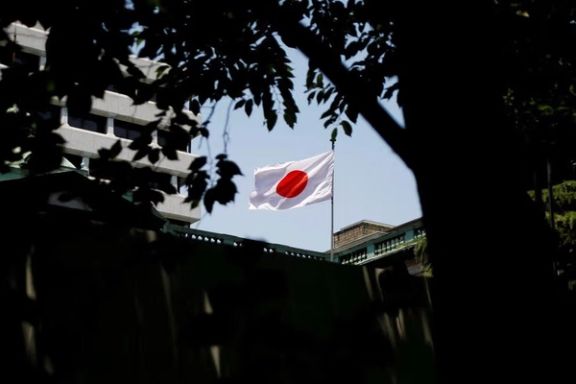
The United Nations Population Fund said Thursday that Japan has allocated $3 million in assistance to Afghanistan, funding that will support about 210,000 people.
The United Nations Population Fund said Thursday that Japan has allocated $3 million in assistance to Afghanistan, funding that will support about 210,000 people.
In a post on X, the UN agency said the funding will be used to provide health, psychological and social services to vulnerable communities, including people affected by natural disasters.
Japan’s embassy in Afghanistan also announced in December 2025 that Tokyo had allocated $19.5 million in humanitarian assistance to Afghans, saying it hopes the support will make a tangible difference in the lives of vulnerable people.
Since the Taliban returned to power, Japan has provided a total of $549 million in assistance to Afghanistan over the past four years, according to Japanese and UN agencies.

Residents of Herat say Taliban enforcers have intensified the arrest of women for failing to wear the dress prescribed by the group, with detentions reported across several crowded areas of the city.
Residents told Afghanistan International that officers from the Taliban’s Ministry for the Propagation of Virtue and Prevention of Vice have increased their presence over the past week in busy parts of Herat and have detained women for wearing dresses that Taliban deem as inappropriate.
Local sources said that on Wednesday that Taliban morality police arrested several women in different parts of the city for wearing Manto. Witnesses said that before noon on the same day, Taliban officers also detained a number of women near Herat’s central hospital for not wearing the hijab required by the authorities.
One woman told Afghanistan International that she witnessed Taliban morality police beating a woman in the Pul-e Rangina area because she was wearing a manto.
According to reports, Taliban enforcers have deployed personnel at Pul-e Rangina, Cinema Square, Golha Square, Darb-e Iraq and other busy areas of Herat to monitor women’s dress.
The Taliban have previously detained and beaten women in Herat, including female health workers, for not wearing Burqa. Some women in the city continue to wear Arabic-style hijab and mantos, despite Taliban directives.
The Taliban have also barred women without Burqa from accessing government services in Herat city and in some districts of the province. Videos obtained by Afghanistan International show Taliban morality police preventing women from entering Herat’s central hospital because they were not wearing Burqa.
In earlier incidents, Taliban officers reportedly held several female health workers inside the hospital for hours until Burqas were brought for them from outside.
Zamir Kabulov, the Russian president’s special envoy for Afghanistan, said no international meetings on Afghanistan have yet been planned for 2026, adding that nothing has been scheduled so far, according to TASS.
Kabulov’s remarks come after a meeting of Afghanistan’s neighbouring countries at the level of special envoys was held in Tehran in 2025, which was attended by Russia’s representative. Russia also hosts the annual Moscow-format talks on Afghanistan, though it remains unclear whether those talks will be held in the new calendar year.
Russia is the only country that has formally recognised the Taliban administration.
In another part of his remarks, Kabulov said Russia and the United States have not held any direct talks on Afghanistan.
He added that as of December 2023, no communication channels remained between Moscow and Washington on Afghan-related issues.
In an interview with TASS, Kabulov also said Afghanistan’s banking system is currently unable to process Russia’s Mir payment cards.
Asked about the prospects for using Mir cards in Afghanistan, he said he does not expect this to happen in the near future, citing technical limitations within Afghanistan’s banking sector and the impact of international sanctions.
Previously, Gul Hassan, the Taliban’s ambassador to Moscow, said the Taliban administration was in talks with Russia on banking cooperation, including the possible use of Mir cards.
The Mir network is a Russian payment system created by the country’s central bank as an alternative to international systems such as Visa and Mastercard.
Responding to a question about regional instability, Kabulov said the Taliban are unable to influence developments in the region.
Zabihullah Mujahid, the Taliban’s spokesperson, said Tuesday that more than 20,000 religious schools, or madrasas, operating under the Ministry of Education are currently active across Afghanistan. He added this about 2.5 million students enrolled in religious studies.
Speaking at a jihadi school in Kandahar province, Mujahid said the Taliban have placed significant emphasis on religious and jihadi education since returning to power.
He also claimed that the authorities have paid attention to modern education, saying about 12 million students are “engaged in learning modern subjects” in schools across the country. Mujahid added that the Taliban have “reformed” the national school curriculum, without providing details.
Since seizing power, the Taliban have prioritised the construction and expansion of jihadi schools, mosques and religious institutions nationwide.
International organisations and human rights groups have expressed concern over the rapid growth of these schools, warning that they risk promoting extremism.
The Afghanistan Human Rights Center said in a recent study that the expansion of Taliban-run jihadi schools has “negative and dangerous” effects on the thinking of young people.
The study, published last year, said the Taliban have altered school curricula and removed several key subjects. It also warned that the number of jihadi schools may be higher than official figures suggest.
According to the findings, the Taliban have built at least one large jihadi school in each province, equipped with extensive facilities and dormitories capable of housing up to 2,000 people. Additional jihadi schools have also been established in many district centres.
In Kunduz province alone, the study said, four large jihadi schools and about 800 religious schools have been established over the past three years.
Meanwhile, the Taliban have kept schools above the sixth grade and universities closed to girls for more than four years, a policy that has drawn widespread international condemnation.
The UNICEF has called for $950 million in urgent funding to meet the basic and humanitarian needs of 12 million people in Afghanistan, including 6.5 million children.
In a statement, UNICEF said the assistance is critical to the survival and well-being of children across the country, warning that needs are growing amid Afghanistan’s deepening, multidimensional crises.
The agency said communities are grappling with the combined impact of natural disasters, a fragile economy, limited access to basic services and recurring climate shocks.
According to humanitarian estimates, about 22 million people, including 11.6 million children, are expected to require assistance across Afghanistan in 2026.
UNICEF also warned of a worsening protection crisis, saying pregnant women, children, young people and marginalised groups face increasing risks.
The agency highlighted the systematic rights crisis affecting women and girls, noting that bans on education, restrictions on employment and daily limitations have weakened their resilience, with long-term consequences for future generations.
Citing the scale and urgency of the challenges, UNICEF appealed for $950 million to support vulnerable populations, particularly children and women, and urged donors to step up funding to prevent further deterioration of humanitarian conditions.
Pakistan has lifted restrictions on the transit of Afghan goods through its ports after months of suspension, the country’s commerce ministry said on Tuesday.
Pakistan Ministry of Commerce said Afghan transit cargo currently stranded at the ports of Karachi, Gwadar and other border crossings has been cleared for export through all Pakistani ports. The move follows a special exemption approved by the Federal Board of Revenue.
Taliban authorities have not yet issued an official response to the decision.
Pakistan closed all border crossings with Afghanistan in October 2025 following deadly clashes between Taliban forces and Pakistani security personnel. The shutdown, which lasted for about three months, caused significant economic losses on both sides of the border.
Pakistani traders had previously warned that the prolonged closure was costing them more than $4 million a day.
Under normal conditions, Afghanistan exports dried fruit, fresh produce, vegetables and coal to Pakistan, while importing cement, textiles, fruit, agricultural produce and other commercial goods from its neighbour.