• العربية
  • پښتو
  • فارسی
Brand
  • Afghanistan
  • Sport
  • Markets
  • Afghanistan
  • Sport
  • Markets
  • Theme
  • Language
    • العربية
    • پښتو
    • فارسی
  • Afghanistan
  • Sport
  • Markets
All rights reserved for Volant Media UK Limited
volant media logo

Closure Of Qatar Camp Would Leave Afghan Migrants In Limbo, Says US Senator

Jan 16, 2026, 12:00 GMT+0

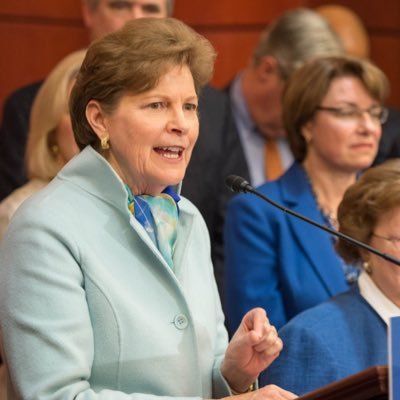
US Senator Jeanne Shaheen, a member of the Senate Foreign Relations Committee, said the planned closure of Camp As Sayliyah in Qatar would leave Afghan migrants housed at the facility exposed to danger and uncertainty.

Shaheen said turning away from Afghan partners who stood “shoulder to shoulder” with US forces under difficult conditions would amount to a major betrayal of American values. She added that such a move would undermine the United States’ ability to earn the trust and cooperation of its allies in times of need.

Earlier, Gregory Meeks, a Democratic member of the US House of Representatives, said President Donald Trump had informed Congress of his decision to shut down Camp As Sayliyah, which has served as a temporary holding facility for evacuated Afghans. According to Meeks, the camp is scheduled to close by the end of September.

In a statement issued on Thursday, January 15, Shaheen, the ranking member of the Senate Foreign Relations Committee, described the plan to close the Afghan migrant camp in Qatar as “deeply disappointing.” She said it was “shameful” for the United States to pressure its Afghan allies to return to life under Taliban rule.

The senator stressed that Afghans at the camp include women, children and individuals who risked their lives in service to the United States. She said the government’s plan would leave these at-risk refugees in limbo, without a clear path to secure resettlement.

Shaheen noted that the majority of Afghans living at Camp As Sayliyah have established pathways for resettlement to the United States and urged the government to honour its commitments and recognise their sacrifices.

She also called on both Democratic and Republican lawmakers to ensure that no Afghan at Camp As Sayliyah is “forced back to a life of persecution and torture.”

Most Viewed

Pakistan Hosts Regional Meet On Afghanistan Without Taliban
1

Pakistan Hosts Regional Meet On Afghanistan Without Taliban

2

Taliban Ignore Afghanistan’s Interests By Backing Militants, Says Pakistan Army Chief

3

Taliban Delegation Travels To Russia To Facilitate Medicine Imports

4

Germany’s Interior Minister Defends Deportations To Afghanistan

5

United Nations Delivers Education Kits To Four Million Afghan Children

•
•
•

More Stories

Taliban Morality Police Resume Violent Enforcement Of Women’s Dress Code In Herat

Jan 16, 2026, 10:20 GMT+0

Afghan women who have been subjected to harassment and violence report that Taliban morality police in Herat have resumed aggressive inspections of women’s dress, and stopping.

They said that these forces interrogate and abuse females ranging in age from 12 to about 70 for wearing a local dress that’s not favoured by the Taliban in public.

The manto is a common form of outerwear in Herat, worn by many women instead of a burqa or other traditional garments. The Taliban have recently banned the garment in the city and now bar women from moving in public while wearing it. The style, also known as Arab dress or Arab hijab, is widely worn in several Islamic countries.

Sources told Afghanistan International on Thursday that Taliban morality police have deployed officers in busy areas including Pul-e Rangina, Cinema Square, Golha Square, Darb-e Iraq, Mostofiyat Square and other crowded parts of the city to monitor women’s hijab.

Reports of Violent Conduct

Eyewitnesses said Taliban officers have stopped public transport vehicles, taxis and rickshaws at several central locations, forcing women who are not wearing a Burqa or prayer veil to get out of vehicles.

One witness said a Taliban morality officer slapped a driver for transporting a woman wearing a manto.

Afghanistan International learned that on Wednesday, following disputes over hijab at Golha Square, several women were detained by the Taliban and taken to an undisclosed location. Another eyewitness said several women were also detained on Thursday, January 15.

Accounts From Residents

Most women who spoke to Afghanistan International said their hijab fully covered their bodies, yet they were still harassed.

One woman said: “Yesterday I was wearing full winter hijab, just without a prayer veil. They forced me off a public bus and did not allow any vehicle or taxi to take me. I was left stranded in Golha Square. When they finally allowed me to leave, I had to go into a side alley and return home by rickshaw.”

Another woman said: “Today I was in a vehicle with my brother. They stopped the vehicle and beat the driver in front of us for picking up women wearing manto. We were not detained, but they warned drivers not to transport women who wear manto.”

A man told Afghanistan International that Taliban officers stopped his 12-year-old daughter and told her she should not leave the house without a burqa. He said tensions escalated after he told them his daughter was only 12, and that he was detained for about half an hour. During that time, he said, he saw at least 15 other women being stopped.

A girl from Herat said she was accompanying her sister to a cardiac hospital when Taliban officers blocked their passage. Her sister, who was wearing a manto, was carrying medication. “Several morality police officers were stationed at the entrances of all alleys connected to Pul-e Rangina and Majidi Street and were not allowing women wearing manto to pass,” she said.

Another woman reported witnessing an argument between a woman of about 70 and Taliban officers. According to her account, the elderly woman shouted at men nearby: “Why are you indifferent in the face of the Taliban?”

Previous Restrictions

The Taliban have previously detained and beaten women in Herat, including some healthcare workers, for not wearing a burqa. Despite the restrictions, some women in the city continue to wear Arab style hijab and manto.

The Taliban have also banned the provision of government services to women without a burqa in Herat city and some surrounding districts. Videos received by Afghanistan International show Taliban morality police preventing women from entering the central hospital because they were not wearing a burqa.
Taliban Leader Signals Fear Of Collapse From Internal Discord

Jan 15, 2026, 16:36 GMT+0

Hibatullah Akhundzada, the Taliban leader, has repeatedly warned that internal divisions pose the greatest threat to the survival of the Islamic Emirate, stressing the need for unity and obedience within the group.

His repeated emphasis suggests Akhundzada does not see the Taliban’s potential collapse as the result of Western pressure or domestic opposition to his hardline policies, but rather as a consequence of internal discord.

The BBC World Service said it obtained an audio recording in which Akhundzada warns a gathering of Taliban officials that “the Emirate will collapse” if internal divisions persist. The recording relates to a speech delivered in January 2025 at a jihadi seminary in Kandahar.

Although the Taliban have consistently denied the existence of internal rifts, remarks by senior figures including Akhundzada himself and Sirajuddin Haqqani, the interior minister point to growing tensions within the group.

In one recent speech in Khost province, Haqqani said a government that rules through “fear and force” is not a genuine government, implicitly acknowledging the Taliban’s reliance on intimidation and violence. He urged members not to humiliate or denounce one another, saying effective governance requires trust and affection between rulers and the public.

A day later, Neda Mohammad Nadeem, the Taliban’s minister of higher education, warned that disobedience or opposition to Akhundzada would weaken the system. He said an Islamic system can have only one emir and that the existence of “multiple emirs” would lead to corruption and failure. Nadeem is widely regarded as one of Akhundzada’s closest allies in Kabul.

Kabul-Based vs Kandahar-Based Factions

Afghanistan International has previously reported extensively on internal Taliban divisions. In October 2025, sources said a nationwide internet shutdown was ordered by Akhundzada. After 48 hours of widespread disruption including the paralysis of public services and Taliban offices Prime Minister Hasan Akhund ordered internet access restored. One source described the episode as a direct confrontation between Kabul-based and Kandahar-based Taliban factions.

A recent BBC report confirmed that the prime minister ordered the restoration following pressure from Kabul-based ministers. The report described two competing camps within the Taliban: a Kabul-based group of ministers and senior officials favouring limited engagement with the outside world, and a Kandahar-based faction loyal to Akhundzada that prefers international isolation. Both support strict enforcement of Islamic law, but differ sharply on foreign relations and governance.

According to the report, the October 2025 decision to restore internet access reflected the very concern Akhundzada had voiced months earlier that certain individuals were threatening the unity of the Emirate.

A Reclusive Leader

People who have attended meetings with Akhundzada told the BBC he rarely speaks and often communicates through gestures, interpreted by a group of elderly clerics present. They said he covers his face including his eyes with a scarf even at large gatherings. Photographing him is banned, and only two images of the Taliban leader have ever been made public.

One Taliban official said meeting Akhundzada is extremely difficult, while another said ministers sometimes wait days or weeks for an audience. Kabul-based ministers have reportedly been instructed to travel to Kandahar only if they receive a formal invitation.

The BBC World Service said it interviewed around 100 people including current and former Taliban members, local sources, analysts and former diplomats for its report, published on Thursday, January 15, examining internal divisions within the Taliban.

US Lawmakers Debate Fate Of Afghan Allies In Senate Hearing

Jan 15, 2026, 11:00 GMT+0

The US Senate Judiciary Committee on Wednesday examined challenges surrounding the relocation of Afghan refugees to the United States.

The review session took place while there is sharp disagreements between Democrats and Republicans over the evacuation and resettlement of former Afghan partners.

Democratic senators said the halt to evacuations and relocations for holders of Special Immigrant Visas (SIVs) amounted to a betrayal of America’s Afghan allies who supported US forces during the two-decade war.

Republican senators, however, argued that the evacuation process was deeply flawed and posed risks to US national security, citing a recent attack in Washington, DC, in which two members of the National Guard were injured.

Following the attack by Rahmatullah Lakanwal, a former member of the Afghan military, scrutiny of Afghan refugees in the United States has intensified. Donald Trump has halted the relocation of Afghan refugees and the issuance of visas to citizens of Afghanistan and several other countries, saying refugees particularly Afghans would be subject to heightened security screening.

Alex Padilla, a Democratic senator from California, rejected Republican claims that security vetting was neglected during the evacuation. He said the Biden administration, despite the chaotic circumstances following the fall of Kabul, adhered to all required security screening procedures and that Afghans transferred to the United States had passed necessary checks.

Padilla said US service members relied on Afghan allies for nearly two decades in some of the most dangerous battlefield conditions, noting that they served as interpreters, intelligence assets and combat partners. He said it was unfair and regrettable to blame all Afghan allies or immigrants more broadly for the actions of one individual, urging lawmakers to avoid scapegoating.

Dick Durbin, another Democratic senator, said Afghan allies were re-vetted multiple times during their journey to the United States, a process that often took months. He said many had risked or lost their lives supporting American forces.

Durbin added that more than 70 percent of veterans of the wars in Iraq and Afghanistan believe the US government has not done enough to support Afghan partners since 2001. He said US troops must know that when they rely on foreign partners in combat, the United States will stand by them after the war.

Chris Coons cited letters from about 1,200 SIV holders describing the harm caused to Afghan allies. He said one Afghan who served for eight years as an explosive ordnance disposal specialist with US special forces still fears arrest by immigration authorities and deportation to Afghanistan.

Coons warned that former US partners returned to Afghanistan would face severe Taliban reprisals, noting that the Taliban had killed a relative of one such ally. He said the United States must not abandon those who stood alongside it.

Republican senators countered by citing the attack on National Guard members and argued that thousands of Afghan refugees were brought to the United States without proper vetting. They accused the Biden administration of mismanagement and incompetence during the evacuation.

Ted Cruz said 13 US service members were killed during the evacuation following the fall of Kabul and that many Afghan allies were left behind. He argued that failures in security screening endangered national security and claimed more than 120,000 people entered the United States within days without full vetting.

Cruz said warnings over the years about security risks linked to unchecked refugee admissions had been ignored.

Japan Allocates $3 Million To Support Afghans, Says UN

Jan 15, 2026, 10:04 GMT+0

The United Nations Population Fund said Thursday that Japan has allocated $3 million in assistance to Afghanistan, funding that will support about 210,000 people.

In a post on X, the UN agency said the funding will be used to provide health, psychological and social services to vulnerable communities, including people affected by natural disasters.

Japan’s embassy in Afghanistan also announced in December 2025 that Tokyo had allocated $19.5 million in humanitarian assistance to Afghans, saying it hopes the support will make a tangible difference in the lives of vulnerable people.

Since the Taliban returned to power, Japan has provided a total of $549 million in assistance to Afghanistan over the past four years, according to Japanese and UN agencies.

Taliban Step Up Arrests of Women In Herat Over Dress Code

Jan 14, 2026, 15:48 GMT+0

Residents of Herat say Taliban enforcers have intensified the arrest of women for failing to wear the dress prescribed by the group, with detentions reported across several crowded areas of the city.

Residents told Afghanistan International that officers from the Taliban’s Ministry for the Propagation of Virtue and Prevention of Vice have increased their presence over the past week in busy parts of Herat and have detained women for wearing dresses that Taliban deem as inappropriate.

Local sources said that on Wednesday that Taliban morality police arrested several women in different parts of the city for wearing Manto. Witnesses said that before noon on the same day, Taliban officers also detained a number of women near Herat’s central hospital for not wearing the hijab required by the authorities.

One woman told Afghanistan International that she witnessed Taliban morality police beating a woman in the Pul-e Rangina area because she was wearing a manto.

According to reports, Taliban enforcers have deployed personnel at Pul-e Rangina, Cinema Square, Golha Square, Darb-e Iraq and other busy areas of Herat to monitor women’s dress.

The Taliban have previously detained and beaten women in Herat, including female health workers, for not wearing Burqa. Some women in the city continue to wear Arabic-style hijab and mantos, despite Taliban directives.

The Taliban have also barred women without Burqa from accessing government services in Herat city and in some districts of the province. Videos obtained by Afghanistan International show Taliban morality police preventing women from entering Herat’s central hospital because they were not wearing Burqa.

In earlier incidents, Taliban officers reportedly held several female health workers inside the hospital for hours until Burqas were brought for them from outside.