• العربية
  • پښتو
  • فارسی
Brand
  • Afghanistan
  • Sport
  • Markets
  • Afghanistan
  • Sport
  • Markets
  • Theme
  • Language
    • العربية
    • پښتو
    • فارسی
  • Afghanistan
  • Sport
  • Markets
All rights reserved for Volant Media UK Limited
volant media logo

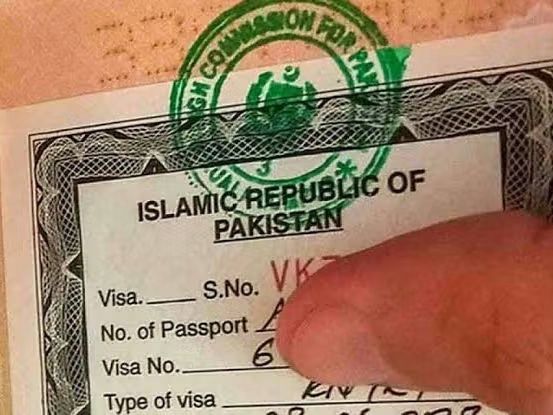
Pakistani Visas Sold on Kabul Black Market For Up To $1,500

Abdulhaq Omeri
Abdulhaq Omeri

Reporter

Feb 20, 2026, 09:57 GMT+0

Afghan applicants say Pakistani visas are being sold on the black market in Kabul for between $1,000 and $1,500, despite an official fee of just around $ 25.

Several applicants told Afghanistan International on Thursday that without paying bribes to travel agencies approved by Pakistan’s embassy and consulates, obtaining a visa is either impossible or can take months.

Some Afghans said they had paid large sums through travel agencies in exchange for expedited and guaranteed visa processing at Pakistan’s embassy and consulates in Kabul, Nangarhar, Kandahar and Balkh.

Applicants seeking medical treatment said they were compelled to pay the inflated prices. According to information obtained, medical visas are sold on the black market for between $1,300 and $1,500, while tourist visas reportedly cost between $1,500 and $2,000.

Several applicants said they were effectively required to deal with travel agencies registered with Pakistan’s diplomatic missions in order to secure a visa.

One applicant in Kabul said: “I applied for a medical visa and paid 1,500 afghanis, but after four months I had not received it. I then paid $1,300 to a company in Kabul and was invited to the embassy for an interview the same day. I received the visa that day.”

He added: “During the interview they asked how much I had paid for the visa. I said 1,500 afghanis. If I had said I paid $1,300, my visa would have been rejected.”

Pakistan’s embassy in Kabul has not responded to the allegations.

Officials at several travel agencies in Kabul and Nangarhar confirmed that Pakistani visas are being sold on the black market. They said applicants who follow standard procedures often wait for months and may ultimately have their applications rejected.

Some Afghans have urged the Taliban authorities to raise the issue with Pakistani officials to curb the illegal sale of visas.

Complaints about Pakistan’s visa process have increased since the collapse of the former Afghan government. Nearly five years into Taliban rule, the issue remains unresolved.

Most Viewed

Taliban Resume Herat Crackdown, Detain More Women
1

Taliban Resume Herat Crackdown, Detain More Women

2

Pakistan To Deport 20,000 Afghan Migrants From Peshawar

3

Taliban Have Made Afghanistan a Regional Terrorism Hub, Says US Think Tank

4

Female UN Appointment Carries Clear Message For Taliban, Says Afghan Diplomats

5

'Escape From Kabul' Awarded 2026 Orwell Prize

•
•
•

More Stories

Tajikistan Seizes 58 Kilograms Of Narcotics Smuggled From Afghanistan

Feb 19, 2026, 15:41 GMT+0
Tajikistan Seizes 58 Kilograms Of Narcotics Smuggled From Afghanistan
100%

Tajikistan’s State Committee for National Security says it has seized 58 kilograms of narcotics smuggled from Afghanistan in the border district of Shamsiddin Shohin and arrested two Tajik nationals in connection with the case.

State television reported on Wednesday, 18 February, citing the security committee, that the confiscated drugs included 30 kilograms of opium, 19 kilograms of hashish and 9 kilograms of heroin.

The two suspects, aged 57 and 55, were detained during the operation. Authorities said the narcotics had been smuggled into Tajikistan by Afghan traffickers through an official border crossing.

According to the committee, the suspects planned to transport the drugs to the capital, Dushanbe, and then onward to other countries through their associates.

Officials said the detainees have been referred to court for prosecution and face up to 20 years in prison under Tajik law.

Last week, Tajik border forces also reported the arrest of an Afghan national accused of drug trafficking. Authorities said he was detained in border areas of Tajikistan with 46 packages of narcotics.

The head of Tajikistan’s Drug Control Agency said that about 2 tonnes and 742 kilograms of narcotics were seized along the country’s border with Afghanistan last year.

Tajik authorities added that drug trafficking originating from Afghanistan increased by nearly 50 percent last year compared with 2024.

Jamiat Ulema-e-Islam Official Meets Taliban Interior Minister In Kabul

Feb 19, 2026, 14:57 GMT+0
Jamiat Ulema-e-Islam Official Meets Taliban Interior Minister In Kabul
100%

A senior member of Pakistan’s Jamiat Ulema-e-Islam (JUI) party met the Taliban’s interior minister, Sirajuddin Haqqani, during a visit to Kabul, according to reports.

Salahuddin Ayubi, described as the party’s finance chief, discussed bilateral relations, border issues and the broader regional situation with Haqqani, the reports said.

Neither the Taliban’s Ministry of Interior nor Jamiat Ulema-e-Islam has released official details of the meeting.

Relations between the Afghan Taliban and Islamabad have deteriorated in recent months. However, Jamiat Ulema-e-Islam has consistently urged Pakistan’s federal government to resolve its differences with the Taliban through dialogue.

Earlier, Maulana Fazlur Rehman, leader of Jamiat Ulema-e-Islam, called on the Pakistani government and the Afghan Taliban to resume negotiations. He has repeatedly criticised Islamabad’s policy towards the Taliban authorities in Afghanistan.

In January 2024, Fazlur Rehman travelled to Kabul in an effort to help ease tensions between the Taliban administration and Pakistan.

Talks Ongoing With US Over American Detainees, Responds Taliban

Feb 19, 2026, 14:03 GMT+0
Talks Ongoing With US Over American Detainees, Responds Taliban
100%

Taliban spokesperson Zabihullah Mujahid has responded to comments by Don Brown, the US chargé d’affaires for Afghanistan, who accused the Taliban of using detained American citizens as leverage in negotiations.

Mujahid said the Taliban are engaged in talks with Washington regarding the fate of American detainees in Afghanistan and are seeking a resolution to the issue.

Brown said on Wednesday that the Taliban had detained US citizens and were using them as tools of pressure and bargaining in discussions with the United States. He described the practice as “deplorable” and called on the international community to increase pressure on the Taliban.

Previously, the US deputy ambassador to the United Nations told the Security Council that the Taliban were using detainees as leverage in negotiations with Washington and other countries.

According to reports, at least three US citizens, including Dennis Walter Coyle and Mahmood Shah Habibi, are currently being held by the Taliban.

The Taliban have denied detaining Habibi and have reportedly demanded the release of an Afghan al-Qaeda member from the Guantanamo Bay detention facility in exchange for Coyle’s freedom.

The group is said to be seeking the release of Mohammad Rahim, who has been held at Guantanamo since 2008 and is accused of cooperating with Osama bin Laden within the al-Qaeda network.

Since 2024, the Taliban have released at least five American detainees, including Amir Amiri, Faye Hall, Ryan Corbett, William McKenty and George Glezmann.

Corbett and McKenty were freed in early 2025 in exchange for the release of a Taliban prisoner. Earlier, Adam Boehler, President Donald Trump’s envoy for hostage affairs, travelled to Kabul for talks with the Taliban over American detainees.

Taliban to Deploy 1,000-Strong Force To Secure Badakhshan Mines

Feb 19, 2026, 12:05 GMT+0
Taliban to Deploy 1,000-Strong Force To Secure Badakhshan Mines
100%

The Taliban’s supreme leader, Hibatullah Akhundzada, has approved the deployment of 1,000 fighters to protect gold mining operations in Badakhshan province, according to the Taliban-appointed governor.

Ismail Ghaznawi, the Taliban governor of Badakhshan, said the force would be sent to the province with Akhundzada’s authorisation to safeguard gold extraction companies. He said the unit was being formed to protect investments and regulate the mining process.

In an interview, Ghaznawi said investment in Badakhshan’s mines required security and organised management, and that he had proposed the creation of a special force to ensure the safety of mining sites.

He added that the force is expected to begin operations soon and that technical preparations are under way.

Some local residents have expressed dissatisfaction over what they describe as a lack of transparency and environmental damage caused by intensive gold extraction.

Ghaznawi said revenues generated from the mines belong to the Taliban but would be spent on public welfare projects, particularly in Badakhshan.

In recent months, clashes have occurred between local residents and Taliban-linked mining companies in the province.

The Taliban have significantly expanded underground mining, especially gold extraction, in the northern provinces of Takhar and Badakhshan. Hundreds of companies are currently engaged in mining activities across northern Afghanistan.

The Taliban’s Ministry of Mines and Petroleum says 100,000 people are employed, directly and indirectly, in gold mining in Badakhshan.

According to the ministry, mining activities are under way in the districts of Shahr-e Bozorg, Yawan, Kohistan, Raghistan, Khwahan and Arghanjkhwa.

Pakistan Summons Taliban Diplomat After Bajaur Attack

Feb 19, 2026, 10:31 GMT+0
Pakistan Summons Taliban Diplomat After Bajaur Attack
100%

Pakistan’s Foreign Ministry summoned the Taliban’s deputy ambassador in Islamabad following a deadly attack in the Bajaur district, delivering a formal note of protest over what it described as the alleged use of Afghan territory in the assault.

In a statement, the ministry said it had expressed serious concern to the Taliban representative and told him that Islamabad reserves the right to respond.

Eleven Pakistani soldiers were killed in the 16 February attack in Bajaur.

The Foreign Ministry said it had conveyed its concern that the leadership of Tehreek-e-Taliban Pakistan (TTP) is based in Afghanistan and operates from Afghan soil with impunity.

It urged the Taliban authorities to take immediate, concrete and verifiable action against all militant groups operating from Afghanistan.

The statement said the Afghan Taliban authorities had been firmly informed that Pakistan reserves the right to act against what it described as “Khawariji” wherever they may be, in order to ensure the security of its soldiers, civilians and borders.

Earlier, Pakistan’s Defence Minister Khawaja Asif warned that if the Taliban failed to curb militant groups, Islamabad would not hesitate to carry out further airstrikes inside Afghanistan.