• العربية
  • پښتو
  • فارسی
Brand
  • Afghanistan
  • Sport
  • Analysis
  • Markets
  • Afghanistan
  • Sport
  • Analysis
  • Markets
  • Theme
  • Language
    • العربية
    • پښتو
    • فارسی
  • Afghanistan
  • Sport
  • Analysis
  • Markets
All rights reserved for Volant Media UK Limited
volant media logo

UK To Reopen Refugee Scheme Prioritising Afghan Women, Palestinians

Sep 28, 2026, 08:34 GMT+1

The UK government is set to reopen a refugee resettlement scheme that will prioritise vulnerable Afghan women and girls, Palestinian refugees and people with disabilities.

The Guardian reported on Sunday that Home Secretary Shabana Mahmood is expected to announce the reopening of the UK Resettlement Scheme at the Labour Party conference on Monday. The scheme had effectively been suspended for two years, although it was never formally closed.

Under the reopened scheme, refugees arriving through the legal route will have a more favourable path to permanent settlement than those who enter the UK through irregular routes, including small-boat crossings.

The Guardian reported that the Home Office expects Afghan women and girls and Palestinian refugees to account for about a quarter of arrivals during the initial phase. Numbers are expected to be limited at first, with an annual cap on admissions.

Home Office sources told the newspaper that the programme was likely to begin with hundreds of refugees and could expand to the low thousands in subsequent years if levels of irregular migration decline.

Eligible refugees will be identified by the UN Refugee Agency (UNHCR) and the International Refugee Assistance Project (IRAP). They will undergo security and criminal-record checks before entering the UK.

Vulnerable women and girls, people with disabilities and others in urgent need of protection will be prioritised. Family units will be allowed to resettle together under the scheme, although the provision will not extend to wider family members.

Mahmood is expected to present the scheme as part of the government’s effort to balance tighter immigration controls with its commitment to protecting the most vulnerable refugees.

Reaction And Criticism

Migration experts and refugee organisations have welcomed the reopening of a safe and legal route but warned that the number of people admitted is likely to be too small to have a significant effect on the number of asylum seekers crossing the English Channel.

Madeleine Sumption, director of the Migration Observatory at the University of Oxford, said the scheme was primarily based on the principle that Britain should play its part in protecting the world’s most vulnerable refugees.

She said, however, that there was no reason to believe resettlement alone would substantially reduce irregular arrivals.

Jon Featonby, chief policy analyst at the Refugee Council, also welcomed the creation of safe and legal routes but said such programmes could undermine the business model of people smugglers only if they operated at sufficient scale.

The scheme is also likely to face criticism from right-wing parties, including Reform UK, particularly over welfare costs and security screening.

Former Afghan MP Fawzia Koofi welcomed the UK’s plans.

Koofi said that after four years of advocacy, campaigning and correspondence, calls to protect Afghan women at risk were finally receiving a response.

She expressed hope that the Home Office would establish a mechanism allowing women at particular risk, especially those who have resisted Taliban restrictions and repression, to benefit from the scheme.
Most Viewed

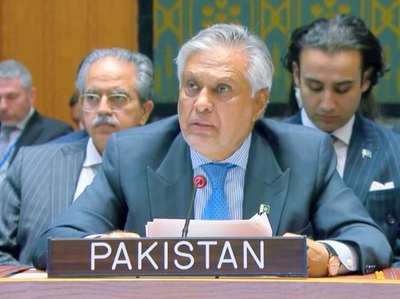
Regional Peace Hinges On Eliminating Terrorism From Afghanistan, Says Pakistan FM
1

Regional Peace Hinges On Eliminating Terrorism From Afghanistan, Says Pakistan FM

2

UK To Reopen Refugee Scheme Prioritising Afghan Women, Palestinians

•
•
•

More Stories

Afghanistan Has Entered Civil War, Says Former Vice President Saleh

Sep 25, 2026, 16:44 GMT+1
100%

Former Afghan vice-president Amrullah Saleh says Afghanistan has entered a civil war, warning that the conflict remains limited for now but could develop into a more violent and destructive confrontation.

In an interview with Outlook, Saleh described Taliban rule as “illegitimate” and said public opposition to the group was taking various forms, with armed attacks being its most visible expression.

According to Saleh, Afghanistan under Taliban rule lacks national sovereignty and a legitimate state system, a situation he said has had serious consequences across the country, particularly in the north, Kabul and other major cities.

Saleh described the challenge posed by anti-Taliban forces as “real” but said their attacks had so far not been sufficiently widespread, intense or “loud”. He added that dictatorships usually underestimate their opponents, public anger and opposition forces.

The former official rejected reports of a serious rift between the Afghan Taliban and Tehreek-e-Taliban Pakistan, saying he had not observed growing differences between the two sides.

Saleh argued that the Afghan Taliban were “indebted” to the Pakistani Taliban and that what might appear to be mutual cooperation was driven more by necessity than favour.

He also claimed that the Taliban had maintained relations with anti-government groups in the region and that some global powers supported these ties.

Saleh called for the secret annexes of the Doha Agreement to be made public, saying: “If the secret annexes to the Doha deal are made public. We can decode the Taliban's conduct more easily. Afghanistan was handed over to them for a purpose.”

Referring to the nature of the Taliban, he said: “A scorpion without venom is not a scorpion.”

Saleh rejected assessments suggesting that the Taliban had “changed” or “reformed”, saying the group had only one “DNA”, which he described as “anti-national, anti-civilisation, anti- inclusivity, misogynistic”.

In his view, the Taliban see themselves as tasked with forcing others into submission through torture.

Speaking about reported differences between the Taliban leadership in Kandahar and Kabul, Saleh said what Afghans were experiencing was cruelty, exclusion and repression.

Saleh also said it was no longer possible to speak of a single policy pursued by an international community, because major powers and neighbouring countries now have different policies towards Afghanistan.

Pakistani Taliban Operate Training Centres in Four Afghan Provinces, Say Sources

Sep 25, 2026, 12:58 GMT+1
100%

Pakistani security sources told Afghanistan International that the Tehreek Taliban Pakistan (TTP) has established military training centres in Kunar, Nangarhar, Khost and Paktika. They said some Afghan Taliban fighters have joined the centres and the TTP’s ranks.

According to Pakistani security sources, the presence of Afghan Taliban fighters at TTP training centres indicates an overlap between Taliban structures and the Pakistani Taliban’s infrastructure.

The sources added that whenever TTP hideouts and facilities are targeted, the Taliban defend the group’s members and shelters rather than dismantling them.

Pakistani security sources also said that armed group activity in Afghanistan is not limited to the TTP, claiming that al-Qaeda, the East Turkestan Islamic Movement and ISIS are also present in parts of the country.

Previous United Nations reports have also documented the continued presence and activities of these groups in Afghanistan.

In recent months, Pakistan has repeatedly accused the Taliban of providing safe havens for the TTP and allowing the group to carry out attacks against Pakistan. The Taliban has denied the allegations, saying it does not allow Afghan territory to be used against other countries.

Widespread Afghan Presence in TTP Ranks

Pakistani security sources said more than 70% of TTP fighters entering Pakistan from Afghanistan are Afghan nationals.

According to the sources, the Taliban has also supplied TTP fighters with weapons and equipment left behind by US and NATO forces. They cited M4 rifles, Remington sniper rifles and night-vision equipment as examples.

According to information provided by Pakistani sources, the identities of 260 Afghan nationals killed in attacks and what the sources described as “terrorist activities in Pakistan” have been established, including their names, addresses and family details.

Pakistani sources said the figure does not include unidentified individuals or active fighters, adding that some of those killed were buried in their home areas in Afghanistan.

The sources also claimed that terrorist activities originating from Afghan territory have killed 1,327 Pakistanis and wounded another 2,484 so far in 2026.

In response to an increase in armed attacks in Pakistan, Islamabad has carried out airstrikes on several Taliban bases and military facilities in three Afghan provinces in recent days.

Pakistan said its strikes on September 21 targeted militant positions in Kunar and Paktika, killing 28 people, while the Taliban and the United Nations reported that three civilians had been killed in Kunar.

On September 24, Pakistan also announced that it had targeted 10 sites in Afghanistan associated with the storage and launch of drones. The Taliban said at least four civilians had been killed in recent Pakistani strikes across three provinces.

The Taliban described the strikes as a violation of Afghanistan’s sovereignty and said it had carried out attacks on Pakistani border positions in response.

260 Afghans Killed Fighting Alongside Pakistani Taliban, Say Sources

Sep 24, 2026, 16:38 GMT+1
100%

Pakistani security sources told Afghanistan International that 260 Afghans have been killed fighting alongside the Pakistani Taliban (TTP) in Pakistan, adding that their identities and addresses have been established.

Afghanistan International has obtained the names, personal details and photographs of these individuals.

According to the sources, the bodies of those killed were returned to their home villages for burial. They said even officials from the Taliban administration attended their funerals.

Pakistani security sources said the figure of 260 includes only those whose identities and personal details could be established. They stressed that the number of Afghans killed while fighting in the ranks of Tehreek-e-Taliban Pakistan (TTP) whose identities remain unknown has not been determined.

The sources also claimed that between 60 and 70 Afghan nationals are currently present in each TTP infiltration group.

Pakistani security sources also accused the Taliban administration of supplying weapons and equipment left behind by NATO and the United States to members of the Pakistani Taliban and Baloch separatists.

According to the sources, almost all members of these groups now possess American M4 rifles, Remington sniper rifles and night-vision equipment.

The Taliban administration has consistently denied Pakistan’s allegations that Afghan territory is being used by the TTP to carry out attacks against Pakistan. In recent years, Islamabad has repeatedly expressed concern over the presence and activities of TTP members in Afghanistan, identifying them as a major factor behind rising insecurity in Pakistan.

Pakistani security sources claimed that a proxy war against their country is being conducted with India’s full support. Both the Taliban and India have denied the allegation.

The sources said that in 2026 alone, terrorist attacks originating from Afghan territory have killed 1,327 Pakistanis and wounded another 2,484. According to them, these figures demonstrate the human cost of terrorism originating from Afghanistan.

The claims come amid escalating clashes between the Taliban and Pakistan in recent days. On Thursday, 24 September, Pakistan announced that it had targeted 10 locations in Afghanistan. In response, the Taliban warned that it would deliver a “crushing response” to the attacks.

Taliban Raid Shia Cleric’s Home in Ghor, Eight Reported Missing

Sep 23, 2026, 15:52 GMT+1
100%

Local sources in Ghor say Taliban intelligence forces raided the home of Mohammad Hamidi, imam of the Khatam al-Anbiya mosque. At least eight people have reportedly been detained or gone missing, with their families unaware of their whereabouts.

According to the sources, Taliban forces stormed Hamidi’s home in the Mohajerin township of Lal wa Sarjangal district on Tuesday, September 22, and surrounded his house and those of several relatives. The sources said the siege continued into Wednesday.

Information provided by local sources indicates that Hamidi’s son Abdullah and his brother Musa Fazel, along with several family friends, were detained during the operation. Accounts of the number of detainees vary among local sources and have not been independently verified.

A source close to the family said Hamidi also left his home during the raid, but it remains unclear whether he managed to escape the area or was detained by Taliban forces. One of his relatives said the family still had no information about his whereabouts or condition.

The incident came days after local sources reported that Hamidi had been detained for holding a religious ceremony and delivering a sermon commemorating Fatima Zahra. People close to the cleric said he was released after being detained by Taliban intelligence and morality police, but was subsequently barred from teaching, delivering religious sermons and leading congregational prayers.

Sources close to Hamidi said religious differences and his activities within the Shia community were among the reasons behind the pressure on him. They also alleged that the Taliban had collected recordings of several speeches he delivered during the former republic and used them as evidence against him. The Taliban has not confirmed these claims.

The Taliban has not officially commented on the operation, the number of people detained or their whereabouts.

Afghanistan’s Hazara and Shia communities have faced a range of security threats and religious restrictions in recent years.

In recent weeks, the Taliban has raided several major Shia political and cultural institutions in Kabul and shut down some universities, media outlets and political offices.

Taliban Forces Raid Karzai’s Home, Disperse Visitors, Say Sources

Sep 23, 2026, 12:19 GMT+1
100%

Taliban forces stormed former president Hamid Karzai’s home and dispersed a group of people who had gone there to meet him.

The reason for the raid remains unclear. Reliable sources in Kabul told Afghanistan International that Taliban forces prevented Karzai’s guests from meeting the former president.

The sources said Taliban forces stormed Karzai’s residence on Wednesday morning, September 23, and “disrespected” tribal elders who were on their way to meet him. It remains unclear whether the aim was to cancel the meeting or impose further restrictions on the former president’s activities.

According to the sources, Taliban personnel entered the former president’s residence without prior coordination. Some people protested against their conduct and asked to be allowed to meet Karzai, but armed Taliban forces dispersed them.

The Taliban has not yet explained the reason for the incident. It is also unclear which official ordered the forces to go to Karzai’s home. Sources said, however, that no attempt was made to arrest him.

One source said the latest restrictions were linked to Karzai’s recent statements on political developments in Afghanistan.

Over the past week, Karzai issued two messages marking the assassinations of Ahmad Shah Massoud and Burhanuddin Rabbani, Afghanistan’s former defence minister and president. He described one as a heroic mujahid and the other as a supporter of peace.

Neither the Taliban authorities nor Karzai’s office has so far commented on the incident.

The Taliban had previously imposed restrictions on Karzai’s movements and activities. In recent years, he has been prevented from making several foreign trips. In July, he was also barred from travelling to his home province of Kandahar.

Another source said restrictions on his social and political activities had also been tightened. According to the source, he cannot meet domestic or foreign figures, diplomats or political leaders without permission.

Sources also confirmed that the Taliban prevented Karzai from attending some Ashura ceremonies and from taking part in the funeral of Ali Khamenei, the former leader of the Islamic Republic of Iran.

According to the sources, some senior Taliban officials have told the former president to refrain from making public comments about the country’s political situation, girls’ education and other issues. Over the past five years, Karzai has repeatedly called on the Taliban authorities to reopen schools and universities to girls.

Karzai remained in Afghanistan after the Taliban returned to power. During this period, he made a limited number of foreign trips, including to Germany, reportedly for annual medical examinations. He also travelled to the United Arab Emirates and UK.