• العربية
  • پښتو
  • فارسی
Brand
  • Afghanistan
  • Sport
  • Analysis
  • Markets
  • Afghanistan
  • Sport
  • Analysis
  • Markets
  • Theme
  • Language
    • العربية
    • پښتو
    • فارسی
  • Afghanistan
  • Sport
  • Analysis
  • Markets
All rights reserved for Volant Media UK Limited
volant media logo

Taliban’s Future Depends On Changing Its Behaviour, Says Pakistani General

Oct 2, 2026, 16:35 GMT+1

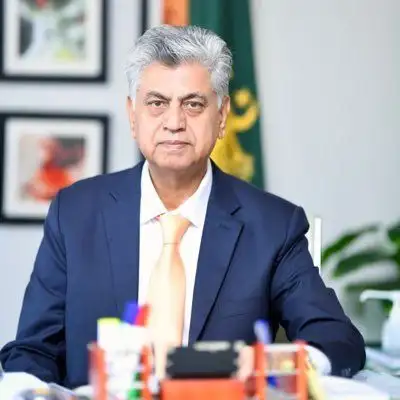
A retired Pakistani general says the Taliban is pursuing three main objectives concerning Pakistan and that Islamabad has turned to military action after political and diplomatic efforts failed to change the group’s approach.

Muhammad Saeed, a retired Pakistani army commander, wrote in an article published in the Dawn newspaper that the Taliban wants to change the status quo along the Afghanistan-Pakistan border, maintain transit trade without new restrictions imposed by Islamabad and, most importantly, see a government established in Pakistan that follows the Taliban’s interpretation of Sharia.

“Having defeated Isaf and Nato, the Afghan Taliban regime feels confident that its allies like Tehreek-i-Taliban Pakistan, Baloch Liberation Army and others can achieve similar success against Pakistan.” he wrote.

Saeed claimed that Pakistani intelligence agencies possessed evidence of the Taliban’s objectives and future plans to support armed organisations opposed to Pakistan. He did not disclose details of that evidence.

The retired Pakistani army commander added that Islamabad had repeatedly engaged with the Taliban through political, diplomatic, intelligence and military channels since 2021. However, he said each of these efforts had been accompanied by an increase in the number and intensity of terrorist attacks originating from Afghan territory.

He accused the Taliban of privately acknowledging the presence of anti-Pakistan armed groups on Afghan soil during discussions with Pakistani officials, while publicly citing capacity limitations and obligations associated with “Pakhtunwali” as reasons for not confronting them.

Pakistan’s Change Of Approach

Saeed wrote that Pakistan had turned to the use of hard power after political and diplomatic efforts failed to persuade the Taliban to prevent Afghan territory from being used against Pakistan.

He described Pakistan’s military operations as necessary acts of self-defence against cross-border attacks, arguing that countries facing persistent attacks from across their borders could not indefinitely rule out the use of force.

However, the former Pakistani military official acknowledged that some political groups within Pakistan opposed military action against the Taliban and favoured continued engagement with Kabul. He said these differences should be managed through political consultation and the presentation of credible intelligence about the nature and scale of the threat.

Saeed also called for diplomatic channels with the Taliban to remain open, stressing that Pakistan should preserve credible opportunities for direct or mediated engagement with Kabul alongside its security policy.

He further argued that the Taliban should understand that armed groups succeed against states only when they do not face powerful military institutions.

According to Saeed, the Taliban’s victories in Afghanistan in 1996 and 2021 were made possible largely by the weakness or collapse of Afghan military forces. He argued that armed groups operating from Afghan territory could not replicate those successes against Pakistan.

The retired Pakistani general concluded that Afghanistan’s future depended on whether the Taliban could transform itself from an armed movement into responsible leadership and establish peaceful and constructive relations with neighbouring countries.

He warned that maintaining the current situation could perpetuate the cycle of conflict between Afghanistan and Pakistan.

•
•
•

Most Viewed

Taliban Acting As ‘Surrogate Mother Of Terror’, Says Pakistan President’s Spokesman
1

Taliban Acting As ‘Surrogate Mother Of Terror’, Says Pakistan President’s Spokesman

2

Pakistan Air Strikes Hit Kunar, Helmand; Taliban Says Nine Civilians Killed

3

Defence Belt From Afghanistan To Lebanon Must Be Strengthened, Says IRGC Quds Force Chief

4

Kandahar Hosted Meeting Of Al-Qaeda, TTP And Baloch Militants, Says Pakistan

5

Pakistan Rejects Taliban Claim Of Islamabad’s Role In Nuristan Clashes

More Stories

Pakistan Moves To Address Enforced Disappearances Allegations

Oct 2, 2026, 14:17 GMT+1
100%

Pakistan’s criminal justice system has faced significant challenges in prosecuting terrorism cases involving transnational militant groups.

Gaps in the legal framework, threats against judges and witnesses, and restrictions on the admissibility of evidence obtained through modern surveillance and electronic means have complicated prosecutions. Between 2001 and 2020, the conviction rate in terrorism cases was reportedly as low as 8%, underscoring weaknesses in traditional criminal procedures when dealing with complex terrorism cases.

When judicial prosecution of hardened criminals becomes ineffective, it can create pressure for law-enforcement agencies to resort to vigilante justice. This can further create space for allegations of enforced disappearances where apprehension of terrorism suspects is not immediately followed by a prosecution process.

Pakistan’s Anti-Terrorism Act (ATA) 1997 provides overarching legal framework for dealing with terrorism-related offences and suspects. However, it still remained short on prosecution of terrorists affiliated with organisations like TTP and BLA. It has been amended through insertion of Section 11-EEEE. Section 11-EEEE provides for “Preventive Detention for Inquiry,” allowing detention for up to 90 days for purpose of inquiry, thereby providing a legal mechanism for investigating terrorism suspects to collect evidence before moving to prosecute them.

Anti-Terrorism (Balochistan Amendment) Act 2025 incorporates amended ATA 1997 to the extent of Balochistan Province by inserting Section 11-EEEE, providing a legal framework for preventive detention for inquiry for up to 90 days enabling relevant authorities and JITs to investigate terrorism suspects and collect evidence within a defined period.

Anti-Terrorism (Punjab Amendment) Act 2026 not only inserted provisions of 11-EEEE by also inserted Section 21-AAA, providing a special-security framework enabling Faceless Courts and enhanced protection for judges, prosecutors and witnesses.

Such protection is critical because terrorism cases often fail to reach final conclusion through conventional prosecution. Judges handling terrorism cases may be targeted or killed, while prosecutors and witnesses face similar threats, resulting in prolonged proceedings and appeals. Pakistan’s reported 8.7% terrorism prosecution rate over past two decades, compared with 88% in UK, 99% in China and 99.9% in Japan, highlights scale of prosecution challenge. Prolonged and inconclusive proceedings also create space for political fronts of terrorist organisations to exploit legal process and build victimhood narratives like missing persons and enforced-disappearance.

Under this framework, a suspect can be held through a defined legal process, with family notification and access and production before a judge within 24 hours. The 90-day period allows LEAs to investigate and collect evidence; if allegations are not established, suspect is released, while sufficient evidence leads to trial.

This framework directly addresses basis of missing persons and enforced disappearance allegations by ensuring that terrorism-related apprehension is traceable and subject to legal safeguards.

However, challenge does not end with investigation. Increasingly organized terrorist groups and criminal networks threaten not only LEAs but also prosecutors, judges and witnesses, making protection of entire criminal-justice chain essential.

This is where Faceless Courts become an important component of the framework. They enable terrorism cases to proceed while protecting judges, prosecutors and witnesses from intimidation, retaliation and targeted attacks.

Under Faceless Court mechanism, High Court Chief Justice nominates five ATC judges and five prosecutors for terrorism-related proceedings. Their identities along with identities of witnesses in terrorism cases are kept confidential.

The protective mechanism extends beyond withholding names by concealing identities and identifying detail of judges, prosecutors and witnesses including through protected documentation, signatures, confidential proceedings and voice masking thereby, safeguarding the judicial and prosecution chain while ensuring terrorism trials can proceed despite threats of intimidation, assassination or kidnapping.

The security threat to judicial personnel is not theoretical. Justice Muhammad Noor Meskanzai, former Chief Justice of Balochistan High Court and Federal Shariat Court, was assassinated in Kharan in 2022 after previously surviving a targeted bomb attack on his convoy in 2015.

District & Sessions Judge Abdul Hakeem Kakar was killed in Mastung in July 2026, while Additional Sessions Judge Tariq Lashari was injured in same attack, illustrating risks faced by judges handling terrorism-related cases.

In Kharan, an Additional Sessions Judge handling BLA cases was kidnapped and later released, further demonstrating the risks faced by judicial personnel involved in terrorism-related proceedings.

The threat extends beyond judges. Around 50 CTD officials have reportedly been killed in Balochistan, while driver of a law officer was shot when officer was recording his statement concerning July 2026 Ziarat terrorist attack in which 27 policemen were killed.

Against this backdrop, confidentiality of judges, prosecutors and witnesses and secure/ video-based proceedings provide practical safeguards to reduce risk of intimidation or physical attacks disrupting terrorism prosecutions.

Faceless Court model also has international precedents. For instance, Colombia operated “jueces sin rostro” (faceless judges) during 1990s, concealing identities of judges, prosecutors and witnesses through measures including screens, two-way mirrors and voice distortion in cases involving drug trafficking, terrorism and organized crime.

Italy’s Law No 82 of 15 March 1991 established special protection mechanisms for people cooperating with justice who faced serious threats from organised crime and terrorism. Italy’s experience in Sicily, including Maxi-Trial of the Sicilian Mafia, illustrates use of protected judicial arrangements in cases involving organised criminal intimidation.

UK’s Coroners and Justice Act 2009 permits courts to issue Witness Anonymity Orders, including withholding identity, use of pseudonyms, screening and voice modification where disclosure could endanger witnesses.

France’s Law No. 2016-731 of 3 June 2016 provides mechanisms for protecting witness identities where disclosure could seriously endanger them or their families, particularly in organised-crime and terrorism-related proceedings.

Spain’s Organic Law 19/1994 on Protection of Witnesses and Experts allows identity and identifying information of protected witnesses to be concealed and provides measures to prevent their normal visual identification while proceedings continue.

Articles 226a–226f of Netherlands’ Code of Criminal Procedure allow identity of seriously threatened witnesses to remain concealed, with their examination conducted under judicial supervision. The mechanism was also used in MH17 proceedings to protect witnesses facing security risks.

Chile’s Law 21.577 of 2023 introduced enhanced protection measures for protected witnesses, informants and undercover agents including concealing identifying information and allowing testimony through means that prevent normal physical identification.

These international examples demonstrate that protecting identity and physical security of those involved in terrorism and organised-crime prosecutions is an established legal response to high-risk criminal environments. Pakistan’s Faceless Courts similarly seek to protect those responsible for delivering justice while keeping terrorism cases within judicial system.

Since implementation of new law in Balochistan, out of 90 detainees 5 have been released where allegations could not be established, while 40 have been referred for trial through Faceless Courts, demonstrating movement from preventive detention towards prosecution through a defined legal process.

The framework therefore provides a statutory, time-bound and traceable process: apprehension, family notification and access, judicial production, investigation and evidence collection, followed by either release where allegations cannot be established or prosecution where sufficient evidence exists.

At same time, Faceless Courts address security dimension by ensuring that terrorists cannot defeat prosecution simply by targeting judges, prosecutors or witnesses.

Taken together, these measures provide a concrete institutional response to narrative of missing persons and allegations of enforced disappearances, demonstrating that terrorism-related apprehensions are addressed through a defined legal framework rather than an unaccounted process.

Defence Belt From Afghanistan To Lebanon Must Be Strengthened, Says IRGC Quds Force Chief

Oct 2, 2026, 12:27 GMT+1
100%

Esmail Qaani, commander of Iran’s Islamic Revolutionary Guard Corps (IRGC) Quds Force, called for strengthening Tehran-backed groups known as the “Axis of Resistance” from Afghanistan to Yemen and from Iran to Gaza and Lebanon.

He also hailed the withdrawal of US forces from Iraq as a victory.

Speaking at a ceremony in Tehran on Thursday evening, Qaani said that Iran must strengthen its belt of defence, independence and dignity from Afghanistan to Yemen and from Iran to Gaza and Lebanon across the Islamic world.

He added that there was now unity across the fronts of the resistance and that each part of the alliance was confronting its enemies through what he described as calculated actions.

In another part of his speech, the Quds Force commander referred to the withdrawal of US troops from Iraq, saying the United States had been expelled from Iraq despite all its capabilities and equipment. He attributed the development to resistance by the Iraqi people and forces aligned with Iran.

US forces completed their withdrawal from Iraq on 30 September, ending more than two decades of military presence. The withdrawal was part of an agreement between Washington and Baghdad to end the international coalition’s mission in Iraq.

According to Reuters, Iran and groups aligned with Tehran have described the US withdrawal as a strategic victory. However, concerns have also been raised about its security implications and the possibility of increased influence by armed groups backed by the Islamic Republic.

Qaani said that although conditions are difficult, by God’s grace and power, the resistance front is moving forward. He also claimed that Iraqis had celebrated the withdrawal of US forces.

Regarding Afghanistan, Qaani included the country alongside Yemen, Iran, Gaza and Lebanon in what he described as a belt of defence, independence and dignity. He provided no further details about the specific role of Iranian-backed armed groups in Afghanistan or Tehran’s policy towards the country.

The “Axis of Resistance” is a term used by Iranian officials to describe Tehran-backed armed groups in the region, including Hezbollah, the Popular Mobilisation Forces, Hamas and Yemen’s Houthis.

Qaani’s remarks come amid reports in recent weeks of increased activity by the Fatemiyoun Division, an IRGC-backed militia composed of Afghan nationals, in Iran’s Sistan and Baluchestan province.

According to Haalvsh, hundreds of Fatemiyoun fighters have been deployed or moved between locations in parts of the province. Videos have also emerged reportedly showing their presence and military training.

In another part of his remarks, Qaani said the United States had believed it could force Iran to surrender within four days or, at most, two weeks, but had encountered circumstances different from those it had anticipated.

Opposition Will Use Every Opportunity To Defeat Taliban, Says Former Afghan MP

Sep 30, 2026, 17:15 GMT+1
100%

Amanullah Paiman, a former Afghan MP who attended the Islamabad conference, said Taliban opponents would use every opportunity to defeat the group and would cooperate with any country supporting what he called the Afghan people’s just struggle.

Paiman spoke at the international conference titled “Afghan Predicament and the Trajectory to Peace” in Islamabad. He told Afghanistan International that Taliban opponents were seeking to persuade not only Pakistan, but countries across the region and the world, that continued Taliban rule was not in the interests of Afghanistan or the region.

“We will cooperate with any country that supports the just struggle of the Afghan people,” he said, adding that resistance movements and Taliban opponents would use every opportunity to achieve victory and defeat the Taliban.

Paiman also referred to the current tensions between the Taliban and Pakistan, saying Taliban leaders had lived and operated in Pakistan for many years but that the group’s relations with Islamabad had now become strained.

He said the main threat facing Pakistan came from the Taliban and added that he had raised the issue at the Islamabad conference. He said that Pakistan itself faces many internal problems, but today the greatest dangers to the country come from the Taliban.

The Afghan politician also said life under Taliban rule had become difficult for a large section of Afghanistan’s population and that the group’s opponents were therefore seeking support from countries in the region and around the world.

Paiman accused the Taliban of damaging Afghanistan’s cultural and historical symbols. “They have attacked all our cultural symbols, including the Persian language,” he said. He also held the Taliban responsible for the political and military environment that led to the killing of former Afghan president Mohammad Najibullah.

The international conference “Afghan Predicament and the Trajectory to Peace” was held in Islamabad on 29 and 30 September, with a number of politicians, political activists and Taliban opponents, including Paiman, taking part.

The conference’s final statement said the Taliban administration was not inclusive and lacked political legitimacy. Organisers claimed that Pashtuns, who make up 42% of the population, hold power, while the remaining 58%, including Tajiks, Hazaras, Uzbeks and Turkmens, are excluded from participation in government.

Pashtuns Hold Power While Other Ethnic Groups Are Excluded, Says Islamabad Conference

Sep 30, 2026, 14:15 GMT+1
100%

The Islamabad International Conference on Afghanistan said Pashtuns, who make up 42% of the population, hold power, while the remaining 58%, including Tajiks, Hazaras, Uzbeks and Turkmens, are excluded.

The statement said the Taliban administration was neither inclusive nor legitimate, adding that excluding a large part of society from power created conditions for structural instability.

The international conference, titled Afghan Predicament and the Trajectory to Peace, was held in Islamabad on 29 and 30 September.

Maria Sultan, president of the South Asian Strategic Stability Institute, presented the conference’s final statement.

The statement said Afghanistan was facing a dual crisis of a non-inclusive and unrepresentative government, while also alleging that the Taliban administration provided safe havens for terrorist groups.

The Islamabad conference said Afghanistan was now facing three fundamental challenges concerning legitimacy, capacity and inclusion.

It said excluding different groups from government created structural instability. The statement added that cohesion within the Taliban regime did not amount to national cohesion and argued that the Taliban system was illegitimate not merely because it lacked recognition, but because of its structure.

The Taliban has described its government as inclusive, saying people from different ethnic groups are represented within its institutions. Critics, however, say the presence of individuals from different ethnic backgrounds does not necessarily amount to political participation by ethnic and social groups in major decision-making.

Current Government Does Not Represent Afghans

In the section titled the Islamabad Declaration 2026, participants said the current Taliban government did not represent the people of Afghanistan.

The document said that control does not mean legitimacy; the absence of war does not mean peace; and regime cohesion does not mean national cohesion.

The declaration also said genuine change was not possible within the Taliban’s current framework and argued that a government excluding women and minorities could not guarantee stability, development or respect for human rights.

Participants called for power to be returned to the Afghan people through the establishment of an inclusive, balanced and modern government.

Warning Over Girls’ Education And Expansion Of Religious Schools

Another section of the statement focused on Taliban restrictions on women and girls.

The document said depriving women and girls of education, employment and parts of public life was among the factors weakening Afghanistan’s capacity.

It also warned about the expansion of religious schools, saying their number had risen to around 22,000 over the past five years, compared with about 18,000 regular schools.

Participants said Afghanistan’s education system should provide religious education alongside science, technology, vocational training and critical thinking.

The declaration described the exclusion of women, who make up roughly half of Afghanistan’s population, as strategic suicide, saying that without women’s participation and an inclusive political system, the younger generation could not be protected from poverty, extremism and violence.

Concern Over Presence Of Armed Groups

The Islamabad conference also warned about the presence and activities of armed groups in Afghanistan.

The statement said more than 20 groups had safe havens in Afghanistan and that their continued activities could have security consequences for Pakistan, Iran, Central Asia, Russia, China and other countries.

The Taliban has denied the presence of terrorist groups in Afghanistan and has repeatedly said it will not allow Afghan territory to be used against other countries.

The declaration called for the establishment of a joint monitoring mechanism involving the United Nations, the Organisation of Islamic Cooperation and the Shanghai Cooperation Organisation to assess commitments related to preventing safe havens, recruitment and financing for armed groups.

Criticism Of International Community

Participants at the Islamabad conference also criticised the international community’s approach towards Afghanistan.

The statement said there was a contradiction between the principles set out in the charters of the United Nations, the Organisation of Islamic Cooperation and the Shanghai Cooperation Organisation and the “tolerance” of Afghanistan’s current situation.

It said engagement with the Taliban without clear benchmarks had failed and argued that any future engagement should be linked to criteria concerning women’s education and employment, political participation, citizens’ rights and efforts against armed groups.

The declaration also called for greater transparency in international aid, saying assistance should reach families directly, particularly women and children.

The Islamabad Declaration 2026 concluded that Afghanistan’s crisis was not solely a matter concerning the government in Kabul but was also linked to what it described as unfulfilled responsibilities of the region and the international community.

Participants warned that ignoring what they called Afghanistan’s non-Taliban majority could become a strategic failure, with security and humanitarian consequences extending beyond Afghanistan’s borders.

Using the phrase Kabul governs, Kandahar commands, the statement said key decision-making within the Taliban structure was concentrated under the group’s leader in Kandahar.

In the statement it is said that forty-two per cent, the Pashtuns, govern, while 58 per cent, including Tajiks, Hazaras, Uzbeks and Turkmens, are excluded.

Do Not Test Afghans’ Patience, Taliban Minister Warns Pakistan

Sep 30, 2026, 13:22 GMT+1
100%

Noorullah Noori, the Taliban’s Borders, Tribes and Tribal Affairs Minister, warned Pakistan and the group’s armed opponents, saying Islamabad should learn from Afghanistan’s history and that Taliban opponents would be “defeated” if they chose war.

Speaking on Wednesday at a meeting with Kuchi elders from six provinces, Noori said those seeking to destabilise Afghanistan would face “serious consequences”.

Relations between the Taliban and Pakistan are highly strained, with both sides accusing each other of supporting armed opponents.

Taliban and Pakistani forces have repeatedly clashed along the border, and last week Pakistan carried out air strikes on targets in several Afghan provinces.

Referring to the tensions, Noori said: “Pakistan’s army and intelligence services should understand the people of Afghanistan from a historical, ideological, political and practical perspective.”

He added that many books had been written about Afghanistan and said Pakistan should learn from the fate of powers that had fought in the country.

The Taliban minister claimed that both the Soviet Union and the United States had been defeated in Afghanistan, saying: “The Americans will write in their history that they were defeated in Afghanistan.”

Addressing Pakistani officials, he added: “Study history, the Afghans and their politics. You should not test the patience and endurance of Afghans.”

In another part of his remarks, the Taliban minister criticised the group’s political and military opponents, including the National Resistance Front and other armed groups.

Referring to nearly five years of Taliban rule, he said: “From whom are you liberating Afghanistan? You are in other countries and say you are resisting to free Afghanistan. From whom do you want to gain freedom?”

Taliban opponents, including the Afghanistan Freedom Front, National Resistance Front and United Front of Afghanistan, have stepped up attacks against the Taliban in recent months.

Noori said Taliban opponents had stood alongside what he called “occupiers” during the presence of US and NATO forces in Afghanistan, but now spoke of fighting for freedom.

He claimed that Afghanistan was now ruled by a “government of religious scholars, martyrs, the people and victims”, adding: “This regime is Islamic, Sharia-based and Afghan.”

The Taliban minister also asked what system the opposition wanted to replace the current administration with, saying the Afghan people were Muslims and that armed resistance against Taliban rule had “no basis in Sharia”.

Noori urged opponents to abandon armed struggle and return to Afghanistan. “Afghanistan is the home of all Afghans. We believe in understanding and we will talk with you,” he said.

He added: “Return to your country and live peacefully. But if you come with guns, you will be defeated.”

Taliban opponents have repeatedly challenged the legitimacy of the group’s administration, saying the Taliban seized power by force, established an ethnically and gender-exclusive government, excluded women from public life and marginalised ethnic communities.