UN Secretary-General Meets Afghan Women Rights Activists
A group of Afghan women's rights activists met with Antonio Guterres, the Secretary General of the United Nations.

A group of Afghan women's rights activists met with Antonio Guterres, the Secretary General of the United Nations.

The Taliban’s commission formed to address Afghan immigrants’ problems announced that since September 17, more than 200,000 people have returned to Afghanistan only through the Torkham border crossing.

On Monday, the Taliban's Ministry of Propagation of Virtue and Prevention of Vice, announced that it will provide job opportunities to clerics who have returned from Pakistan to Afghanistan.

The United Nations announced that the Taliban's order to ban opium cultivation has caused Afghan farmers to lose more than one billion dollars in income from the sale of opium.

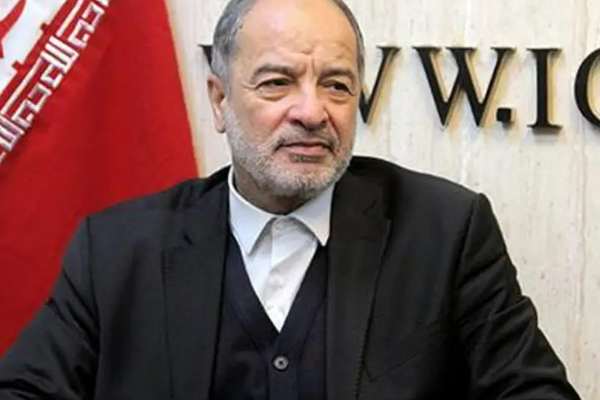
Akbar Ahmadian, Secretary of the Supreme National Security Council of Iran, met Mullah Abdul Ghani Baradar, the Taliban’s Deputy Prime Minister, on Sunday, and said that Iran supports the independence, stability, and progress of Afghanistan.

Zhao Sheng, China's ambassador to Afghanistan met Amir Khan Muttaqi, Taliban's foreign minister, on Sunday, and urged Pakistan and the Taliban to resolve the issue of deportation of undocumented refugees "in a cordial manner”.

Saleem Safi, a well-known Pakistani journalist, wrote in the Urdu-language Jang newspaper on Saturday, that some members of the Taliban cabinet have Pakistani citizenship.

Vladimir Putin, Russia’s president, said that some of the Western-made weapons sent to Ukraine have made their way to the Middle East through the illegal market and have been sold to the Taliban.

Mullah Abdul Ghani Baradar, the Taliban’s Deputy Prime Minister for Economic Affairs, left Kabul for Tehran on Saturday.

Hanif Atmar, former Foreign Minister of Afghanistan, said that the forced mass deportation of Afghan immigrants from Pakistan is a "human disaster".

Sarfraz Bugti, Pakistan's interior minister, said that the deportation of Afghan immigrants was an internal issue and emphasised that the Taliban has not requested Pakistan to reconsider its decision.

Khan Jan Alokozay, the head of the Pakistan Afghanistan Joint Chamber of Commerce, announced that the assets of Afghan immigrants worth more than four billion dollars have been seized in Pakistan.

Mullah Hassan Akhund, the Taliban’s prime minister, asked the government of Pakistan to solve its problems with the group through dialogue and not to show its power to the Afghan immigrants.

Pakistan rejected demands from the United Nations, human rights groups, and Western embassies to review the deportation plan for Afghan migrants.

As the mass deportation of Afghan immigrants has started in Pakistan, Mullah Yaqoob, the Taliban's defence minister, urged Islamabad to "consider the repercussions of its actions" and that it will "reap what it sows”.

The Commissionerate for Afghan Refugees in Pakistan announced that on Thursday, 19,320 people returned to Afghanistan from the Torkham crossing.

Reliable sources in Herat told Afghanistan International that the Taliban has detained Faridoon Fakuri, the theatre manager of the Directorate of Information and Culture of Herat province.

On Thursday, local sources reported an explosion in the city of Pol-e Khomri, the capital of Baghlan province.

As Pakistan starts nationwide deportation of immigrants without official residence documents in the country, the state of Sindh has decided to extend the refugee card of Afghans until December 31.

The National Resistance Front (NRF) and Afghanistan Freedom Front (AFF) announced that the three young men who were shot by the Taliban in Balkh were not members of their groups.

Three aid organisations announced that around 10,000 Afghan refugees enter Afghanistan from Pakistan daily. Norwegian Refugee Council, Danish Refugee Council, and the International Rescue Committee said that these migrants had "nowhere to go”.