Iran, Taliban to Form Joint Committee to Prevent Border Clashes
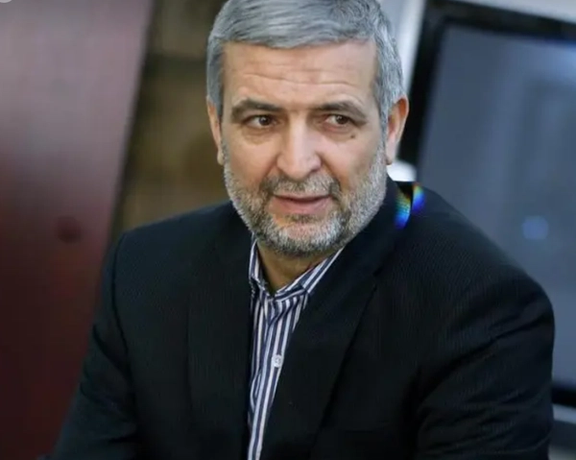
Representatives of the Iranian and Taliban government held a meeting in the Hirmand region after border clashes on July 31.

Representatives of the Iranian and Taliban government held a meeting in the Hirmand region after border clashes on July 31.
Hassan Kazemi Qomi, Iran’s special representative for Afghanistan, said that Ministry of Defense of the Taliban has called on the group’s forces stationed at the border and advised them to avoid conflict.
Kazemi also stressed that a joint committee will be formed to prevent such clashes in the future.
On Sunday, Taliban forces and Iranian border guards have clashed in Darwish area of Kang district of Nimroz province, too.
Local sources told Afghanistan International that two members of the Taliban were killed in the border clash on July 31.
The border commander of the Taliban confirmed the death of one of his men, but the governor of Hirmand city in Iran's Sistan and Balochistan province said that the conflict between the Iranian border guards and the Taliban in Nimroz ended without casualties.


The Directorate of Public Works of the Taliban in Zabul says that 26 people lost their lives and 4 others were injured due to the recent floods in the province. Women and children are among the dead and injured in Zabul.
According to the Taliban, most of the floods took place in Shahr-e-Safa, Daychopan and Arghandab districts.
The Taliban-controlled Bakhtar News Agency reported yesterday that roads were destroyed in Zabul because of recent floods.
Reports from Ghazni and Kandahar also say that floods have caused casualties in these provinces in the last 24 hours.

Amir Khan Muttaqi, the Taliban acting Foreign Minister met with Umurzakov Sardor Uktamovich, head of the Presidential Administration of Uzbekistan, the Taliban announced on Saturday.
According to a Taliban statement, the two sides talked about bilateral relations, transit and cooperation in the agricultural sector.
Muttaqi and Uktamovich also discussed the start of the construction of the railway project spanning across Uzbekistan, Afghanistan and Pakistan.
The meeting took place on the sixth day of the Taliban delegation’s visit to Uzbekistan. The Taliban delegation led by Muttaqi had reached Tashkent on July 24.
Earlier on Tuesday, Muttaqi had addressed an international conference on Afghanistan in Tashkent with a focus on the achievements of the Taliban government over the past eleven months.
This conference ended on Tuesday, but the Taliban delegation did not return to Kabul.
On Friday, Tashkent hosted a two-day meeting of foreign ministers of the Shanghai Cooperation Organisation.
The foreign ministers of China, India, Pakistan, Kazakhstan, Russia, Kyrgyzstan, Tajikistan, and Uzbekistan participated in the meeting.
Although Muttaqi was not present at the SCO meeting, he met with the foreign ministers of Pakistan and China on the sidelines of the event.

Mawlana Tayeb, a member of the Pakistani clerics’ delegation, has advised the Taliban to reopen girls' schools in Afghanistan. Tayeb said that in order to convince the Taliban officials, he cited the example of his wife who had translated the Quran into Pashto language.
On July 25, a delegation of Pakistani clerics led by Mufti Taqi Usmani arrived in Kabul. It was reported that the clerics’ visit to Kabul was aimed at convincing the Pakistani Taliban to cease fighting against Pakistan.
The Pakistani delegation had travelled to Kabul at the invitation of the Afghan Taliban. They met with Noor Wali Mehsud, the leader of the Pakistani Taliban, and held meetings with the leaders of the Afghan Taliban.
The delegation returned to Pakistan on Friday. Mawlana Tayeb, an influential cleric from tribal areas of Pakistan, who was also a member of the delegation, said, "In our meeting with the Afghan Taliban, we emphasized that they should reopen girls' schools, so that they can be educated. I gave them an example and said that I am also a mullah, but my niece is currently serving as a general in the Pakistani army."
Life under the reign of Taliban has become difficult for Afghan women. They have lost the right to work, and education, among other things.
So far, the Taliban has not paid attention to the demands of domestic and international stakeholders to reopen girls' schools. It has been more than 315 days since Afghan girls above grade six have been denied the right to go to school.
However, Tayeb stated that the Taliban said that girls' schools will be reopened soon. "The Taliban appreciated our proposal to reopen girls' schools and assured us that they will soon reopen girls' schools and colleges, so that women can study according to Sharia law," he said.

At least 19 civilians have been killed and many more injured in Friday’s blast at the cricket stadium in Kabul, said Antonio Guterres, the United Nations Secretary General.
Guterres strongly condemned this attack and said that attacks on civilians and civilian objects are strictly prohibited under international law.
Thomas West, the US special representative for Afghanistan, has also said that he is deeply saddened by the explosion during a cricket match in Kabul.
West said that violence serves no purpose and is not an answer for the people of Afghanistan.
Earlier, the Emergency Hospital in Kabul had confirmed that 13 wounded were taken to the hospital, one of them was declared dead on arrival and 12 others were under treatment.
Other local sources told Afghanistan International that seven people had been killed in the attack. Eyewitnesses also said that the number of dead and injured was high.
However, the Taliban officials announced that only four people were injured during the cricket stadium explosion. No group or individual has claimed responsibility for this attack yet.

At least 295 members of the Afghanistan National Resistance Front (NRF) have been killed in the war against Taliban last year, as per sources. According to the internal report of the National Resistance Front, the Taliban has captured 38 members of this front.
The highest casualty has been in the Panjshir area, which also houses most of the NRF bases, with 184 people killed.
The total number of injured has not been revealed yet.
On the other hand, according to sources, five Taliban fighters have been captured by this front and at least 400 Taliban fighters have been killed over the past year.
The Taliban has not reacted to this report of the National Resistance Front.