• العربية
  • پښتو
  • فارسی
Brand
  • Afghanistan
  • Sport
  • Markets
  • Afghanistan
  • Sport
  • Markets
  • Theme
  • Language
    • العربية
    • پښتو
    • فارسی
  • Afghanistan
  • Sport
  • Markets
All rights reserved for Volant Media UK Limited
volant media logo

Former Afghan President Calls for National Discourse in Afghanistan

Oct 6, 2022, 15:35 GMT+1

Former president Hamid Karzai met Okada Takashi, the Japanese Ambassador in Afghanistan, and urged for a national discourse to reach stability and peace in the country. Karzai has stressed that Afghanistan can achieve solidarity through a national dialogue.
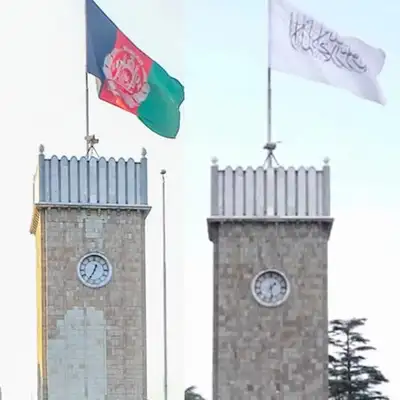
The Taliban have not yet responded to the former Afghan president’s call. According to Karzai’s press office, in the meeting with the Japanese ambassador at his residence in Kabul, they also exchanged views on the education of Afghan girls and the attack at the Kaj educational center.

In the meeting with the former Afghan president, Takashi expressed his condolences to the victims of the terrorist attack at the Kaj educational center.

According to the UN statistics, at least 53 people had been killed and more than 110 had been injured in the suicide attack on the Kaj educational center in western Kabul. Most of the victims in the attack had been female students.

The former president of Afghanistan has also urged the Taliban to reopen schools for female students across Afghanistan.

Most Viewed

Pakistan Hosts Regional Meet On Afghanistan Without Taliban
1

Pakistan Hosts Regional Meet On Afghanistan Without Taliban

2

Taliban Ignore Afghanistan’s Interests By Backing Militants, Says Pakistan Army Chief

3

Taliban Delegation Travels To Russia To Facilitate Medicine Imports

4

Germany’s Interior Minister Defends Deportations To Afghanistan

5

United Nations Delivers Education Kits To Four Million Afghan Children

•
•
•

More Stories

Indian Police Officials Prevent Afghan Students’ Demonstration in New Delhi

Oct 6, 2022, 14:27 GMT+1

A group of Afghan students protested in New Delhi on Thursday in support of the "Stop Hazara Genocide" campaign. According to an organiser of the protest, the Indian police prevented the demonstration from proceeding and transferred the protesters to a police station.

The organiser told Afghanistan international that they had taken permission to hold the demonstration in New Delhi.

The organisers said that it was still unclear as to why the police blocked their demonstration.

After the recent deadly attack at the Kaj educational center in the west of Kabul city, widespread protests have been held inside Afghanistan and outside the country.

Several human rights groups and civil society activists have launched a Twitter campaign with #StopHazaraGenocide hashtag. So far, this hashtag has been tweeted more than five million times.

Taliban And Uzbekistan Officials Meets To Resolve Border Issues

Oct 6, 2022, 13:09 GMT+1

Border officials of Taliban and Uzbekistan met in the Northern Hairatan port of Afghanistan on Thursday. The Taliban’s Ministry of Defense said that the group's border officials have discussed resolving the border issues through dialogue in order to prevent border violations.

Earlier in July 2022, Taliban forces had clashed with Uzbek border guards in Shortepa district of Balkh province.

According to the Taliban’s Ministry of Defense, the group’s 6th brigade command Mansoor Jawid and the commander of the border forces of Uzbekistan, met in Hairatan port.

After the Taliban took control of Afghanistan in August 2021, the Taliban forces have clashed with Iran, Pakistan, and Uzbekistan forces several times.

In one such case, Uzbek President Shavkat Mirziyoyev confirmed that an Uzbek soldier had been killed during clashes on the border with Afghanistan.

Earlier this year, Islamic State-Khursan (IS-K) claimed to have launched a rocket attack on the Termez military facility in Uzbekistan from Afghanistan.

Afghanistan and Uzbekistan have a 137 kilometers joint borders.

Anti-Taliban Leaders Discuss “Ethnic Genocide in Afghanistan" with Iraqi Leaders

Oct 6, 2022, 10:18 GMT+1

Atta Mohammad Noor and Mohammad Mohaqiq, members of the Supreme Council of National Resistance for the Salvation of Afghanistan, discussed the genocide and targeted ethnic and religious killings in Afghanistan with Ammar Hakim, the leader of Iraq's National Wisdom Movement.

Noor said that the two sides talked about religious extremism, the spread of threats of terrorism in the region, and the lack of governance in the Taliban-dominated areas.

Abdullah Qarluq, the deputy leader of the National Islamic Movement of Afghanistan; and Rahmatullah Yarmel, the former governor of Zabul; were also present at the meeting.

Noor and Mohaqiq, have also participated in a conference organised by Al-Rafidain Center for Dialogue in Baghdad.

Noor, while addressing the conference, had said that the Taliban is not a legitimate group ruling the country and that the group has close ties with global terror groups.

Noor and Mohaqiq had met with Nouri al-Maliki, the former Prime Minister of Iraq.

The meeting of these anti-Taliban figures in Iraq takes place while several Iraqi religious leaders have recently said that the Taliban had been responsible for the killing of Shia community members in Afghanistan.

Taliban Gives 3-Day Eviction Warning to 400 Families In Takhar, Say Local Sources

Oct 6, 2022, 09:40 GMT+1

Based on Taliban’s orders, forced displacement of 400 families has started in Mohajer Qeshlaq village of Khwaja Bahauddin district of Takhar province, said several local residents. The Taliban officials have given the residents of the village three days to evacuate village.

Two local residents told Afghanistan International that the families had been ordered to evacuate their homes on Tuesday, and at least 100 families have been displaced on Wednesday.

According to the sources, if these families do not leave the village within three days, "they will be forcibly evicted from their homes and they will not have the right to move out their belongings and clothes”.

A local resident told Afghanistan International that women, children, and men have fled to the fields and cannot even afford to buy a tent.

However, a Taliban official in Takhar denied issuing an evacuation order for the 400 families.

Nikzad Mohajim, the spokesperson of the Taliban governor in Takhar, said that a court will examine the documents held by the residents and newly-arrived groups who claimed to own the village and a decision will be taken.

Earlier, a Taliban delegation from Kabul was sent to Takhar province, which has reportedly returned with a report on the situation and submitted it to the Taliban Council of Ministers for a decision, but there have not been any updates about the Taliban’s leadership’s decision.

The conflict between residents and newly-arrived groups, which speak Pashto and Urdu languages, has been going on for several months in Khwaja Bahauddin district.

Local residents argue that these people, with the support of the Taliban, want to settle in Khwaja Bahauddin district and forcibly evict the indigenous people who have lived there for decades.

Taliban Attempting To Erase Women From Afghan Society, Says Amnesty International

Oct 5, 2022, 15:06 GMT+1

In a new report on Wednesday, Amnesty International has said that since the return of the Taliban to Kabul in August 2021, the group has created a culture of fear, and threatens to completely erase women and girls from public life in Afghan society.

The report highlighted Taliban’s systematic attacks on the rights of women and girls and the use of violence, including torture and other ill-treatment, and enforced disappearances.

It added that despite the Taliban’s initial promise to respect women’s rights within the Islamic framework, women and girls’ rights have been under attack and the policies, regulations and decrees of the de facto authorities have denied and violated the human rights of women and girls in the country, including rights related to public participation, education, free movement, peaceful assembly and expression.

While noting that enforced disappearances, torture and other ill-treatment by members of the de facto authorities, are some factors adding to the worsening condition of women and girls in the Afghan society, the statement said that economic and social conditions also directly undermine the rights of women and girls, ranging from a crumbling economy to increased rates of child, early and forced marriage.

“Ten interviews by Amnesty International with Afghan women’s rights activists both inside and outside the country over the past six months suggest that women are subject to an increasing number of human rights violations and that the space for political dialogue with Taliban leaders on the issue is shrinking. Many prominent women leaders have been arrested or harassed, and others have fled abroad,” the report said.

The report also cited activists who have been at protests where journalists described to Amnesty International of being attacked for reporting on human rights violations, and the de facto authorities have taken steps to try to undermine accounts of abuse of women and girls on social media.

The report also highlighted how following the Taliban takeover of Kabul, women have been excluded from political decision-making at almost every level and no women have been granted leadership positions in the Taliban government and none were invited to the Taliban’s Grand Council, also known as the Afghanistan Ulema Grand Council, which was convened in Kabul.

Amnesty International said that the ongoing violations of women and girls’ rights is continually worsening.

Amnesty International called on the Taliban to respect, protect, promote and fulfil the rights of women and girls to freedom of expression, association and peaceful assembly and take immediate steps to guarantee the right to work, the right to movement, the right to political participation and other human rights.

It also called on the group to revoke the ban on girls attending secondary schools and remove restrictions on female students and teachers at all levels, including restrictions on clothing, conduct, and gender segregation of students and teachers.

The global organisation also urged the international community to send a clear message to the Taliban that their current policies towards women and girls are not, and never will be, acceptable, through their actions against Taliban leaders.

It asked the UN Security Council to adopt a resolution, including a set of concrete steps, to take in response to the situation of systemic violations of women and girls’ rights in Afghanistan – including targeted sanctions and travel bans against Taliban members implicated in these human rights violations.