United Nations Does Not Allot Afghanistan Seat to Taliban, Again

For the third time, the United Nations Credentials Committee postponed the decision on handing over Afghanistan’s seat in the UN to the Taliban.

For the third time, the United Nations Credentials Committee postponed the decision on handing over Afghanistan’s seat in the UN to the Taliban.
With the UN refusing to hand over the seat to the Taliban, Naseer Ahmad Faiq, the Permanent Representative of Afghanistan’s previous government to the United Nations, remains in his position.
The UN General Assembly has approved the resolution not to handover Afghanistan’s seat to the representative of the Taliban without voting.
In addition to Afghanistan, the UN Credentials Committee has postponed the review of Myanmar's credentials to a later date.
The UN has said that it has received two correspondences regarding Afghanistan's seat, one from the permanent representative of the former Afghan government and the other from the Taliban's foreign ministry.
The UN had rejected the transfer of Afghanistan's seat to the Taliban on two prior occasions.
Currently, Faiq, who was appointed by the former Afghan government, is the permanent representative of Afghanistan at the United Nations.
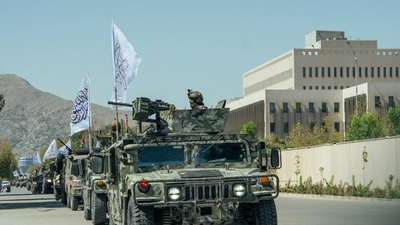
During a recent meeting with Yue Xiaoyong, China's special envoy for Afghanistan affairs, Taliban Foreign Minister Amir Khan Muttaqi requested the commencement of operations at the Aynak copper project.
The discussion focused on initiating the practical aspects of this mining project.
Abdul Qahar Balkhi, spokesperson for the Taliban's Foreign Ministry, released a statement on Monday detailing the talks between Muttaqi and Xiaoyong. The dialogue centered around recent progress in Afghanistan-China bilateral relations.
Yue Xiaoyong assured that China respects Afghanistan’s sovereignty and will not meddle in its internal matters. The Chinese envoy emphasized collaboration between the two nations to initiate the mining project.
The meeting also addressed the potential for expanding Afghanistan's export sectors to China. Muttaqi highlighted the need for exploring opportunities that would enhance trade between the two countries.
Balkhi mentioned that China has considerably reduced customs duties on Afghan imports, a move aimed at strengthening bilateral trade.
The Taliban Foreign Ministry’s statement affirmed the group’s readiness to begin work on the Aynak copper mine. The Taliban leadership has repeatedly requested Chinese authorities to expedite the start of the project.
Located in Logar province, the Aynak copper mine is not only Afghanistan's largest copper mine but also ranks as the world's second-largest. In 2008, Afghanistan and the Chinese company MCC signed the mining contract, granting MCC a 30-year extraction license.
Over the past two years, the Taliban has significantly increased mining activities across Afghanistan, awarding extraction rights for various large and small mines to both local and foreign entities, predominantly Chinese firms.
This mining initiative comes as the Taliban confronts financial challenges, seeking to boost revenue through resource extraction. However, many mining experts have criticized these efforts, labelling them as exploitative depletion of Afghanistan's natural resources.

An Iranian newspaper, Jomhouri-e Eslami, has published an article alleging that the Sunni Islamist armed group Jaish ul-Adl operates bases in Afghanistan with the support of the Afghan Taliban.
According to the newspaper, the group receives both logistical and political backing from the Taliban, which raises concerns about potential malevolent activities.
Sayed Ahmad Mousavi, the article's author, also noted that some Kurdish groups, under the Taliban's patronage, are operating in Afghanistan, conducting military exercises.
The newspaper’s article is based on the broader hypothesis that forced deportations of Afghan immigrants from Iran and Pakistan are designed to pressure the Taliban.
The article suggests that both Iran and Pakistan may be using the deportation of Afghan immigrants as leverage against the Taliban. This theory is supported by the concurrent initiation of mass deportations by both countries, particularly in response to increased insecurity and attacks by Tehreek-e-Taliban Pakistan (TTP) in Pakistan.
The publication raised the possibility of Iran and Pakistan collaborating to contain the Taliban, especially considering the recent visit of high-ranking Pakistani security and military officials to Tehran before the start of the mass deportation of Afghans from Iran. The article implies that Afghan immigrants are being used as a tool to pressure the Taliban.
However, the paper, identified as affiliated with Iran's reformist political faction, warned that Iran's involvement in a plan orchestrated by Pakistan could have negative consequences. The author expressed concerns that such a move might provoke the Taliban to support proxy groups like Jaish ul-Adl against Iran.
The article's claims follow the recent attack by Jaish ul-Adl on a police headquarters in Rask City, Sistan and Baluchistan, Iran, which resulted in the deaths of 12 Iranian police officers. Iranian officials believe that Jaish ul-Adl operates from bases in Pakistan.
Jaish ul-Adl is an armed Sunni Islamist group opposing the Islamic Republic of Iran, which introduces itself as the "Army of Justice".
The group considers itself the defender of Sunni rights, especially in Sistan and Baluchistan province of Iran.
Sistan and Baluchistan province in the southeast of Iran is the second largest province of the country. The Sunni citizens of this province complain about widespread discrimination by the Iranian government against them.
In reaction to the attack, former Afghan government officials, including Rahmatullah Nabil, former head of Afghanistan's National Directorate of Security, have also indicated ties between the Taliban and Jaish ul-Adl. Nabil said that the Taliban had overthrown Nimroz province in 2021 with the support of the same group.

On Monday, Zhulia Parsi's family confirmed to Afghanistan International, that this Afghan women's rights activist has been released from the Taliban’s prison after about three months of detention.
The Taliban had arrested Parsi from her house in Kabul on September 27.
There is no information about Parsi's health status yet.
Earlier on December 4, along with reports of her "deteriorating physical condition" attributed to "torture" in a Taliban prison, sources informed Afghanistan International that Parsi had been transported to the hospital.
Sources did not provide information regarding the reason for her transfer to the hospital back then.
Several Afghan women rights activists wrote on social media that Parsi was taken to the hospital "with a poor physical and mental condition caused by brutal torture in the Taliban's prison”.
Sources, including one close to Parsi's family, have confirmed her transfer to the hospital. However, the Taliban has not provided any details to her family regarding the reason for the transfer, the nature of the illness, or the physical condition of this women's rights activist.
On September 27, Parsi and her child were arrested by the Taliban from her house in Kabul.
She was the head of the Spontaneous Movement of Afghan Women in Kabul, which protested against the discrimination and deprivation of women under the Taliban rule in Afghanistan.

Usman Jadoon, Deputy Permanent Representative of Pakistan to the UN, has claimed that the Pakistani Taliban possesses advanced weaponry and employs it to fuel regional instability and threaten Pakistan's security.
He urged the UN to investigate how the Tehreek-e-Taliban Pakistan (TTP) acquired such arms.
On Sunday, Dawn, a Pakistani newspaper, reported that Jadoon called the threats posed by diversion, illicit trafficking, and misuse of small arms and light weapons alarming during an open debate of the United Nations Security Council.
He explained that terrorist groups like TTP obtain modern weapons from illicit arms markets or receive them from entities that want to destabilise a particular region or country.
“Terrorists and criminals do not manufacture these advanced arms; instead, they acquire them from illicit markets or entities with intentions to destabilise specific regions or countries,” he stated.
Jadoon announced that Pakistan will work closely with the international community to expose those responsible for supporting and financing TTP.
This Pakistani diplomat emphasised that it is the responsibility of all governments and the United Nations to take measures to prevent illicit trade and transfer of weapons.
Following the Taliban takeover of power in Afghanistan, TTP’s attacks against the Pakistan’s army have increased.
Pakistani authorities have several times said that TTP fighters are using US weapons left in Afghanistan in attacks against security forces of the country.
In September, Mumtaz Zahra Baloch, Pakistan’s foreign ministry spokesperson, had announced that the US weapons left in Afghanistan have fallen into the hands of terrorists and are a threat to Pakistan. She said that the situation needs global attention.

In an interview with TASS news agency, Semyon Grigoryev, the Russian ambassador to Tajikistan, said that the Taliban have not been able to secure Afghanistan’s borders yet.
Grigoryev said that in 2023, many times, extremists tried to infiltrate Tajikistan from Afghanistan.
In the interview, which was published on Monday, he said that they do not see any particular progress in the Taliban's commitment to ensure the security of Afghanistan's neighbouring countries.
Grigoryev added that during this year, the extremists were trying to penetrate the territory of Tajikistan from Afghanistan’s border, but all of the attacks were quickly suppressed by the security forces of Tajikistan.
This Russian diplomat said that Afghanistan is facing a downfall in the social and economic sphere and the country is literally on the verge of a severe humanitarian crisis.
His statements were made while Vladimir Putin and Emomali Rahmon, the presidents of Russia and Tajikistan, discussed Afghanistan in Moscow last month.
The Russian ambassador to Tajikistan said that the serious attention of the leaders of Russia and Tajikistan to the issue of Afghanistan is fully justified and requires continuous coordination.
He also mentioned the increase in the trafficking of industrial drugs from Afghanistan and criticised that the western countries have actually reduced the anti-narcotics programs’ budget of Afghanistan.
The Russian ambassador has also expressed concern about the massive influx of refugees deported from Pakistan to the northern provinces. According to him, in this situation, there is the possibility of altering the ethnic composition of the population in northern Afghanistan.
Grigoryev warned that terrorist elements may exist among the displaced.
He added that Russia will do its best to prevent attacks on its allies.
Earlier, in September, Tajikistan’s National Information Agency reported the killing of three "terrorists" by the country's security forces near the Afghan border. Tajikistan’s State Committee for National Security said that these individuals were members of the “Jamaat Ansarullah” movement and entered the country from the border area of Darwaz district in Afghanistan.
Also, in April, the Tajikistan National Security Committee had announced that two terrorists who entered Tajikistan from the border of Afghanistan had been killed.
Officials of Tajikistan and other Central Asian countries have repeatedly expressed concerns over the increase of terrorist activities in Afghanistan and its spillover to these countries.
