6 Terrorists Killed In Northern Waziristan Were Afghans, Reports Pak Media
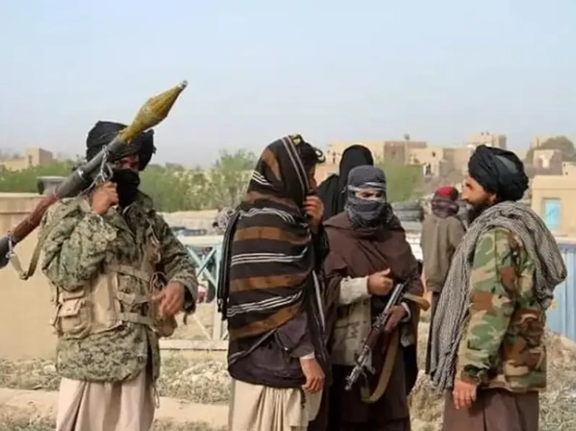
Dawn News reported that the six fighters who were killed in North Waziristan on February 28 were Afghan citizens and members of Tehreek-e-Taliban Pakistan (TTP).

Dawn News reported that the six fighters who were killed in North Waziristan on February 28 were Afghan citizens and members of Tehreek-e-Taliban Pakistan (TTP).
Quoting security sources, Dawn reported that the involvement of Afghan citizens in "terrorist" actions in Pakistan has been confirmed once again.
This Pakistani media outlet stated that a 16-year-old suicide bomber was also killed among the fighters.
Disclosing the identity of the fighters, it wrote that these TTP fighters were from Khost, Logar and Paktika provinces of Afghanistan.
Last week, Pakistani security forces in North Waziristan killed six militants and seized a large number of weapons and equipment.
Earlier, Pakistani authorities had accused the Taliban of collaborating with TTP, alleging the use of US weapons left in Afghanistan in attacks against Pakistan's security forces.
In response, the Taliban refuted these allegations, advising Pakistan to address its internal issues rather than blaming others.

Radio Television Afghanistan (RTA), under Taliban control, has announced that the United Nations is organising an upcoming international conference in Kabul focused on alternatives to poppy cultivation.
Quoting a statement from a former UN official, it wrote that the primary objective of the conference is to attract financial support for individuals involved in the alternative poppy cultivation sector.
However, the report does not provide specific details regarding the exact date and time of the conference.
RTA stated that Pino Arlacchi, former executive director of UN drug control programme met with Mullah Abdul Ghani Baradar in Kabul.
The purpose of this former UN official's trip to Kabul remains unclear.
During the meeting, Baradar said that the current level of narcotics production and trafficking in Afghanistan has "reached zero."

Maulana Yousaf Shah, from Haqqania madrasa, has indicated that negotiations between Pakistan and the Tehreek-e-Taliban Pakistan (TTP) are set to resume, contingent on approval from Taliban leaders in Kandahar and the group's Interior Minister.
These remarks were made in the context of the Afghan Taliban's instructions to the TTP to reinitiate dialogue with Islamabad.
According to The Express Tribune, which cited its sources, Pakistan has enlisted the help of the Jamiat Ulema-e-Islam, Sami ul Haq faction, leveraging its influence to persuade the Pakistani Taliban to reengage in negotiations.
Maulana Yousaf Shah, representing Jamiat Ulema-e-Islam, conveyed to The Express Tribune about the discussions that acknowledging their autonomy in decision-making, they have commenced the dialogue. “We are hopeful that with Sirajuddin Haqqani's endorsement and the backing of the Kandahari Taliban, we will reach a favourable conclusion,” he added.
Shah also mentioned his involvement, alongside others, in dialogues with the TTP during Faiz Hameed's tenure as the chief of Pakistan’s intelligence agency, the ISI.
He further asserted that a peaceful resolution and bringing the Pakistani Taliban to the negotiation table are feasible with the goodwill of both parties and mutual support for the dialogue process.
Another Haqqania madrasa representative informed The Express Tribune that with the assistance of the Taliban's Interior Minister and Islamabad's backing, the TTP is expected to engage in negotiations.
The Express Tribune has disclosed that the Kandahar Taliban and the Haqqani network have encouraged the Pakistani Taliban to initiate talks with the Pakistani government to alleviate tensions between them and Islamabad.
Nonetheless, sources close to both the Pakistani and Afghan Taliban have refuted the reports of any meetings between the two factions' leaders.
Previously, Geo News reported a meeting between Mullah Mohammad Hassan, the Taliban's Prime Minister, and Noor Wali Mehsud, the TTP leader. The Afghan Taliban reportedly advised the TTP that their attacks within Pakistan were undermining the group's relationship with the Pakistani populace and government.
This denial occurs as Maulana Hamid ul Haq, leader of the Jamiat Ulema-e-Islam, engaged with prominent Taliban figures in Afghanistan, including Mawlawi Abdul Kabir, the deputy prime minister for political affairs, Interior Minister Sirajuddin Haqqani, Refugee Affairs Minister Khalil-ur Rahman Haqqani, and the Governor of Logar, during a visit to the country.
During a discussion with Hamid ul Haq, Mawlawi Abdul Kabir emphasised the Taliban's stance against allowing any threats to others from Afghan territory.

Commander Ahmadali Goodarzi of the Islamic Republic of Iran's Border Guard announced the discovery of one tonne and 230 kilogrammes of narcotics near the Afghan border.
As reported by IRNA, Goodarzi revealed that the narcotics were ingeniously concealed within a transit vehicle, which was subsequently identified and intercepted by Iranian authorities.
Goodarzi further detailed that the operation took place at the Milak border crossing, leading to the arrest of an individual implicated in the drug smuggling operation.
The seized narcotics were identified as hashish, carefully hidden within the vehicle, Goodarzi added.
This incident marks yet another significant narcotics discovery by the Iranian border guard along the Afghanistan border in recent months.

Local sources told Afghanistan International that Taliban intelligence operatives detained Agha Lali, the former director of the National Directorate of Security (NDS) in Lashkargah city, along with seven other ex-NDS personnel.
The arrests were executed across various locales within Lashkargah, as confirmed by these sources.
On Sunday, the Pashto service of Afghanistan International was informed that following the collapse of the Afghan government, Lali had initiated a grocery business within Lashkargah.
Reports indicate that the Taliban apprehended him at his business premises, although the precise reasons behind the detention of Lali and his former colleagues remain undisclosed.
Family associates of Agha Lali have also confirmed his arrest to Afghanistan International. Additionally, it was revealed that besides Lali, the Taliban has apprehended seven more individuals previously affiliated with the government's intelligence service, spread out over different sections of the city. However, specifics regarding their identities have not been provided.
Taliban intelligence representatives in Helmand have opted not to comment on these arrests.

During a visit to the Taybad district, Abdullah Sohrabi, an assistant to the Iranian Foreign Minister, asserted the necessity for Iran to take control of markets in Afghanistan and unspecified "target countries."
Highlighting the geographical proximity to Afghanistan as a "golden opportunity," Sohrabi identified the Dogharoon border as a pivotal economic corridor linking the two nations, though he remained vague about the specifics of the "target countries."
Reports from Iranian media revealed that, in a meeting with the Governor of Taybad on Saturday, Sohrabi underscored the critical importance of nurturing and advancing Iran-Afghanistan relations.
Advocating for an intensified focus on large-scale economic initiatives, Sohrabi stated that such projects are essential for bolstering job creation and enhancing the Iranian economy.
He highlighted the critical role of the Dogharoon border, through which a substantial amount of Afghanistan's import needs are met. By boosting the economic capacity of this border, Sohrabi argued, there can be significant strides towards ensuring economic stability for border-adjacent families.
Situated 18 kilometres from Taybad and directly beside Afghanistan, the Dogharoon border stands as one of Iran's foremost economic gateways. It is a major conduit for the flow of goods from Afghan, Pakistani, and occasionally Indian merchants routed through the Persian Gulf to Bandar Abbas customs before transiting through Dogharoon.
Despite the lack of formal recognition for the Taliban regime by any country following their ascendancy in Afghanistan, regional nations, including Iran, have visibly deepened their economic and political engagements with the group.
Taliban leaders have consistently invited Iranian investors to explore investment opportunities within Afghanistan.
