2-Day Clash Between Pakistani Guards & Militants At Afghanistan Border Ends

The Pakistani newspaper Dawn reported on Monday, citing its sources, that the clashes between Pakistani border guards and militants at the Afghanistan border has ended.

The Pakistani newspaper Dawn reported on Monday, citing its sources, that the clashes between Pakistani border guards and militants at the Afghanistan border has ended.
According to Dawn, these clashes began on Saturday evening in three border areas in the Lower Dir of Khyber Pakhtunkhwa.
So far, the Pakistani military has not commented on the clashes.
Dawn reported, citing local residents, that there had been no exchange of fire or shooting in the Lower Dir district on Monday.
According to the report, after two days of fighting, the militants retreated to Afghanistan.
The Pakistani media wrote that both sides suffered casualties in these clashes, however, the details of the casualties are not clear.
It also reported that on Monday, local elders, politicians, and intellectuals held a jirga to discuss a permanent solution for maintaining law and order in the region.
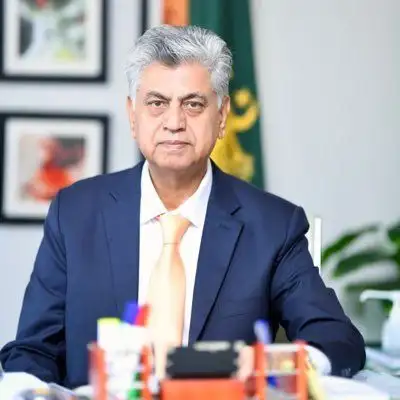

Ali Maysam Nazary, the head of foreign relations for the National Resistance Front (NRF), stated that the people of Afghanistan are closer to achieving political unity and consensus about the future of their country.
Speaking on the sidelines of the Vienna conference on Monday, Nazary called on the international community to "abandon the failed policy of appeasement" and support the Vienna conference. Meanwhile, Rangin Dadfar Spanta, former National Security Advisor of Afghanistan, described the Taliban as a "disaster" at the fourth Vienna Conference for a democratic Afghanistan.
Spanta urged opposition groups to unite to save Afghanistan from this "disaster”. Former Afghan Justice Minister Fazl Ahmad Manawi, speaking on the sidelines of the Vienna conference, told Afghanistan International that the diversity of Afghanistan is represented at this meeting.
Manawi added that the UN's unilateral engagement with the Taliban at the Doha meeting has increased people's concerns.

A UN source confirmed to Afghanistan International that the third Doha meeting will be held under the supervision of Rosemary DiCarlo, the UN Deputy Secretary-General.
The source added that DiCarlo will meet separately with representatives of the Taliban and Afghan civil society.
The Doha meeting, scheduled for about a week from now, will take place in Doha, Qatar's capital, with the participation of special representatives from several countries, a delegation from the Taliban, and several Afghan civil activists.
The UN's decision to send DiCarlo comes amid widespread criticism that the organisation has "overlooked" the inclusion of female representatives and the issue of women's rights at this meeting.
Critics have stated that the UN, at the request of the Taliban—who have excluded women from all areas of public life, including banning their employment and education—has sidelined women and women's rights from the Doha meeting.
However, Roza Otunbayeva, the UN Special Representative for Afghanistan, has said that women's rights will be addressed in areas such as combating drug abuse at the meeting.
Otunbayeva noted that women make up 35% of the three million drug addicts in Afghanistan, highlighting the importance of discussing this issue at the Doha meeting.
Previously, a Taliban Foreign Ministry official announced that the agenda for the Doha meeting had been shared with the group and that the discussions would focus on private sector issues, finance, banking, and combating drugs.
Meanwhile, some protestors at a demonstration in Paris called on European countries to boycott the Doha meeting.
Rosemary DiCarlo, the UN Deputy Secretary-General for Political Affairs, reportedly visited Kabul a few weeks ago and invited Amir Khan Muttaqi, the Taliban’s Foreign Minister, to attend the Doha meeting.
The previous UN meeting in Doha on Afghanistan, attended by UN Secretary-General António Guterres, included several female representatives and Afghan civil activists.

Stéphane Dujarric, the UN spokesperson, stated on Sunday that the goal of the Doha meeting is to encourage the Taliban to engage with the world in a coordinated and orderly manner for the benefit of the Afghan people.
Dujarric added that human rights, particularly women's rights, will be highlighted in all discussions at the meeting.
He further noted that the Doha meetings are part of a process, not a one-time event, and that Afghan women and civil society will remain part of this process.
The Taliban will send their representatives to Qatar late next week to participate in a two-day meeting with senior UN officials and special representatives from 25 countries for Afghanistan in Doha.
This is the third UN-led meeting and the first to include Taliban officials. However, the exclusion of women and civil society representatives from the main meeting has sparked widespread criticism.
Tirana Hassan, executive director of Human Rights Watch, told Reuters that excluding women from the Doha meeting risks legitimising the Taliban and causing irreparable damage to the UN's credibility as a defender of women's rights and meaningful participation.
Agnès Callamard, Secretary-General of Amnesty International, stated that marginalising crucial discussions on human rights is unacceptable and sets a very damaging precedent.
Rosemary DiCarlo, the UN's head of political affairs, and Roza Otunbayeva, the UN's special representative for Afghanistan, are set to meet separately with Afghan civil society groups after their meeting with the Taliban.
However, at a press conference in New York, in response to a question from Maryam Rahmati, a journalist for Afghanistan International, about the Taliban's opposition to women's participation in the Doha meeting, Otunbayeva said, "[The Taliban] are not like us. The Taliban have come from the mountains and from war, and turning them into people who sit at the negotiation table and accept our principles is not easy."
Otunbayeva said that the Doha meeting will focus on the private sector and combating drugs. She also noted that the upcoming meeting has created significant expectations that realistically cannot be met in one session.

The Pakistani newspaper Dawn reported, citing local sources, that Pakistani border forces clashed with militants in the Maidan area of Lower Dir district in Khyber Pakhtunkhwa province on Saturday.
The Pakistani army has not yet commented on the incident, and no exact details about potential casualties have been released.
According to Dawn, the clashes occurred when "terrorists" attempted to enter Pakistan from the border areas with Afghanistan. Pakistani security forces surrounded the militants at three different points, and army helicopters conducted airstrikes on militant hideouts.
The severity of the conflict prompted the army to dispatch additional troops to the area.

Zabihullah Mujahid stated that the Taliban expect the Islamic Republic of Iran to recognise the group more than other countries. Mujahid once again urged the Islamic Republic to prioritise the recognition of the Taliban.
In an interview with Tabnak News Agency, published on Sunday, the Taliban spokesperson said, "Our expectation from Iran is higher. The Islamic Republic should have more interactions in the area of recognition compared to other countries, and this recognition should be a priority for the Islamic Republic of Iran."
Mujahid highlighted that the Taliban have achieved good cooperation with the Islamic Republic of Iran in various sectors, including the economic field.
While the Islamic Republic of Iran, like other countries, does not officially recognise the Taliban, it maintains economic and political relations with the group and has handed over the Afghan embassy in Tehran to the Taliban.
Confirming the Taliban's interactions with the Islamic Republic of Iran, Mujahid said, "We find these interactions beneficial, and we have more trust in this area, and we will continue to move towards further strengthening these relations."
Over the past three years, despite interacting with the Taliban, the Islamic Republic of Iran has repeatedly emphasised the need for an inclusive government to be formed in Afghanistan.
Earlier in June, Hassan Kazemi Qomi, the Islamic Republic's Special Representative for Afghanistan, stated after the Contact Group meeting for Afghanistan in Tehran that suggesting a government with the presence of various groups and "competent individuals" in Afghanistan does not mean interfering in Afghanistan's affairs.
However, in his interview with Tabnak News Agency, Mujahid implicitly considered Qomi's request as interference in the Taliban's affairs. He stated, "The formation of the government, the nature of the government system, inclusivity or exclusivity, is specific and belongs to the Afghans and not to any other country."
Regarding the Taliban's non-participation in the Contact Group meeting for Afghanistan in Tehran, Mujahid said that the Taliban have their own policy about participating in certain meetings.