Turkmenistan's Electricity Imports To Herat Cut Off
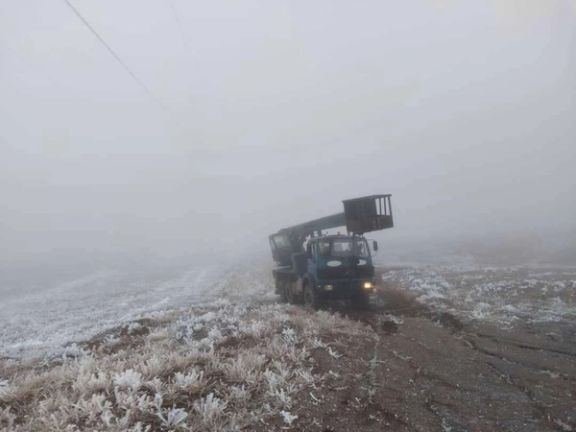
The Taliban-controlled Bakhtar News Agency reported that Turkmenistan's imported electricity has been cut off in parts of Herat province since noon on Monday.
The Taliban-controlled Bakhtar News Agency reported that Turkmenistan's imported electricity has been cut off in parts of Herat province since noon on Monday.
Local officials claimed that cold weather and "freezing of the wires" in the Rabat Sangi district have caused power outages.
The Taliban-controlled Bakhtar News Agency reported on Tuesday (December 3) that a team from the Taliban's DABS in Herat has been dispatched to the area with two vehicles to fix the problem and restore the power supply.
According to information provided by Taliban officials, Turkmenistan's imported electricity to Herat was cut off at around 1:50pm on Monday (December 2).
Herat, located in western Afghanistan, imports electricity from Iran and Turkmenistan.
Meanwhile, a number of residents of different provinces complained about the shortage of electricity and power cuts during the winter season, saying that this situation has caused many problems for them during the day.
Afghanistan is not self-sufficient in the field of electricity and imports more than 70 percent of its electricity needs from Uzbekistan, Turkmenistan, Tajikistan and Iran.

Taliban leader Mullah Hibatullah issued a decree blocking all higher and semi-medical education institutions for girls. The Taliban's Ministry of Public Health announced to health institute officials on Monday that girls are no longer allowed to study in these centres.
Despite the closure of universities and schools for girls, they continued to study in health institutes and were trained in fields such as midwifery, pharmacy, laboratory, X-ray, physiotherapy, nursing, and prosthodontics.
The head of a private institution in Kabul told Afghanistan International that the Taliban's Minister of Public Health summoned the officials of the institutes and informed them of Mullah Hibatullah's order.
He added that the Taliban's Minister of Public Health emphasised that women and girls are not allowed to enter health institutes as of Monday (December 2).
According to the source, "The Taliban's Minister of Public Health had summoned them to the ministry without saying what the meeting was about. He did not even allow questions about Mullah Hibatullah's new order."
Another source told Afghanistan International that according to Mullah Hibatullah's new decree, all governmental and non-governmental health institutions have been closed to girls.
"Most of our students were women, but today they all stayed at home," said the head of a health institute in Kabul.
After the ban on girls' education, it has become difficult or even impossible for these institutes to continue operating, the source added, as the majority of their students were women.
Health institutes were the last place where women and girls could continue their education, but now they have been denied the opportunity, the source said.
Health institutes on Monday have informed their students not to attend classes starting Tuesday (December 3).
Now, with the closure of health educational institutions, the crisis of shortage of gynaecologists and nurses in Afghanistan will intensify.
After returning to power, the Taliban closed schools above the sixth grade to girls and then banned them from attending universities. These restrictions were gradually expanded to include a ban on women working in governmental and non-governmental organisations. In addition, women were also prohibited from going to parks, baths, hairdressers, and traveling without a male relative.
The Taliban's restrictions on women have sparked widespread reactions at the international level. The UN Human Rights Office and some countries have described these actions as a clear violation of human rights, an example of crimes against humanity, and an example of gender apartheid.
A number of countries have referred cases of violations of women's rights to the Hague Court, but the Taliban has increased restrictions and prohibitions for women in response.
Following the referral of Afghanistan's case to the International Criminal Court, the court's chief prosecutor, Karim Khan, announced that he would soon request arrest warrants for Taliban officials.
He said that investigations into human rights violations, particularly women's rights, in Afghanistan were ongoing.
The 23rd session of the Assembly of States Parties began today in The Hague, Netherlands. The session is scheduled for December 2-7, 2024.
"I can confirm that with the excellent efforts of the team who have been working steadily on this issue, we will soon announce requests for an arrest warrant in the Afghanistan Situation File," Karim Khan said in a statement at the meeting on Monday.
He did not elaborate on the details of the sentence.
Last week, Chile, Costa Rica, Spain, France, Luxembourg and Mexico referred the case of Afghanistan, especially the violation of women's rights in this country, to the International Criminal Court. The International Criminal Court also confirmed that it had received the case.
The International Criminal Court recently issued an arrest warrant for Israel’s Prime Minister Benjamin Netanyahu, and former Israeli Defence Minister Yoav Gallant.
The court is also expected to issue arrest warrants for some Taliban leaders involved in "systematic violence" against women and "the prevailing gender apartheid in Afghanistan".
What does the court order mean?
Fawad Pouya, an international law researcher at the University of Pittsburgh, told Afghanistan International that with the referral of Afghanistan's case by six members of the International Criminal Court, the court's investigation into Afghanistan has resumed in earnest.
According to him, the new investigation is a continuation of the court's previous investigation, which first began in March 2020. He added that the new investigation supports and expands on the previous case.
The international law researcher also clarified, "The arrest warrant is not only directed at the Taliban, but former members of the government of the Republic of Afghanistan may also be prosecuted."
The referral of cases by various countries puts additional pressure on the ICC to make a decision and announce it as soon as possible, he said.
Karim Khan stressed that his office has conducted an independent, impartial and robust investigation into the situation in Afghanistan. The investigation also includes allegations of systematic discrimination and harassment against women and girls.
The investigation demonstrates the ICC's commitment to pursuing and holding accountable crimes against humanity and gender abuse, the statement said. The ICC has also welcomed the determination of member states to address these crimes and support ongoing investigations.
The Taliban has not previously responded to the referral of the group's human rights violation case to the Hague court.
The World Health Organisation (WHO) announced that 81 cases of polio have been recorded in Afghanistan and Pakistan since the beginning of this year.
The organisation reported on Monday that 25 cases of polio had been identified in Afghanistan and 56 in Pakistan.
According to the World Health Organisation, two new cases of polio were recorded last week in the cities of Uruzgan and Helmand and one in the Khyber Pakhtunkhwa province of Pakistan.
According to information published by the World Health Organisation, which provides monthly polio statistics in Afghanistan and Pakistan, six cases of polio were recorded in Afghanistan and six in Pakistan last year.
The Taliban, however, claim that no positive cases of polio have been reported in Afghanistan this year.
Recently, the International Organisation for Migration (IOM) announced that from September 2023 to August 2024, 67,752 Afghan children received the polio vaccine with the support of the Global Polio Eradication Initiative.
The United Nations Assistance Mission in Afghanistan (UNAMA) said that a number of young people from the southern provinces of Afghanistan participated in an ongoing dialogue to craft a unified vision for the country’s future.
According to UNAMA, these young people expressed concern about the lack of basic human rights, despite being satisfied with security in the country and the reduction of poppy cultivation.
UNAMA said in a statement on Monday, December 2, that the youth of Helmand, Kandahar, Nimroz, Uruzgan and Zabul provinces came together over the course of a year and finally drafted a charter to "engage with [Taliban] government officials and the international community”.
UNAMA has said that the charter constitutes the aspirations of these young people, but did not elaborate further on it.
"While young participants acknowledged positive changes after August 2021, such as improved security and reduced poppy cultivation, [but] they expressed concern about persistent unemployment, limited access to education, lack of basic human rights, and the widespread impacts of climate change," the UN mission wrote.
One of the participants told UNAMA representatives, "Unfortunately, we feel unheard, sidelined, and disappointed, and we are losing hope. We don’t want to merely survive; we want the opportunity to thrive and contribute to the country’s development and future."
According to UNAMA's estimates, three-quarters of Afghanistan's population is under the age of 30. Decades of war, instability, and underdevelopment have affected the youth, especially those in rural areas. According to UNAMA, young people face severe challenges, including unemployment, illiteracy, poverty and social deprivation, and many of them are considering migrating from the country in search of better opportunities.
The expert meeting of the foreign ministers of the member countries of the Economic Cooperation Organisation (ECO) began on Monday without the presence of Taliban members in Mashhad.
The main meeting of ECO foreign ministers will be held tomorrow (Tuesday). It is not yet clear whether the Taliban has been invited to the meeting or not.
Earlier, an Iranian Foreign Ministry official had said that Amir Khan Muttaqi, the Taliban's foreign minister, will not attend the 28th meeting of foreign ministers of the member states of the Economic Cooperation Organisation (ECO). Ahmad Masoumifar clarified that not inviting the Taliban is the decision of the ECO secretariat. The Taliban has not commented on the group's presence at the summit.
Last year, no representative from Afghanistan was invited to participate in the ECO meeting.
According to Iranian media reports, in addition to expert delegations and ambassadors of ECO member countries in Tehran, the foreign ministers of Tajikistan and Kazakhstan and the ECO secretary general have arrived in Mashhad.
According to IRNA, the head of the Islamic Republic of Iran's Foreign Ministry's mission in Khorasan Razavi province said, "A wide range of different issues in the region will be put on the agenda of the summit by senior experts and officials at today's ECO expert meeting."
On the sidelines of the first day of the ECO summit in Mashhad, Ahmad Masoumifar said that these issues revolve around transit, environment, inter-agency trade, customs, and banking transactions.
"In addition to officials from member countries, the summit will be attended by the head of the ECO Trade and Development Bank, the heads of ECO affiliated institutions and other unions in the region, including the eight Islamic developing countries, and the Asian Dialogue Forum," he told reporters.
The ECO was created on the initiative of Iran, Turkey and Pakistan, and then Afghanistan, Tajikistan, Kazakhstan, Uzbekistan, Kyrgyzstan, Turkmenistan and Azerbaijan joined it.
ECO is a regional organisation established by Iran, Pakistan and Türkiye in 1964 with the aim of promoting economic and cultural cooperation among member states. Then, since 1992, with the admission of seven new countries, including Afghanistan, Azerbaijan, Kazakhstan, Kyrgyzstan, Tajikistan, Turkmenistan, and Uzbekistan, the number of its members has increased to 10 countries.
Since joining the Economic Cooperation Organisation (ECO), Afghanistan has always been an active member of this regional organisation. However, the Taliban's return to power in 2021 and the group's lack of recognition have caused Afghanistan's representative to be absent from many important international meetings. Afghanistan was also the biggest absentee from last year's ECO meeting in Tashkent, Uzbekistan.