• العربية
  • پښتو
  • فارسی
Brand
  • Afghanistan
  • Sport
  • Markets
  • Afghanistan
  • Sport
  • Markets
  • Theme
  • Language
    • العربية
    • پښتو
    • فارسی
  • Afghanistan
  • Sport
  • Markets
All rights reserved for Volant Media UK Limited
volant media logo

Taliban Commerce Minister Seeks Trade Alternatives On Visit To Iran

Nov 15, 2025, 14:13 GMT+0

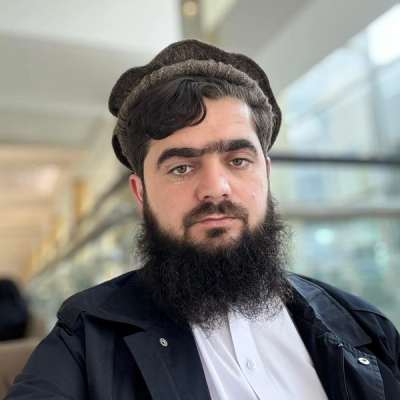
Taliban Minister of Industry and Commerce Nooruddin Azizi has travelled to Iran following the group’s decision to halt trade and transit relations with Pakistan.

During the one-day visit, Azizi is scheduled to tour the port of Chabahar and take part in a joint Iran–Afghanistan economic meeting in Hirmand.

Azizi was received at the border on Saturday by Mansour Bijar, the governor of Iran’s Sistan and Baluchestan province. Speaking to ISNA, Bijar said expanding bilateral cooperation would help support sustainable development and regional security. He added that shared cultural, religious and linguistic ties could facilitate increased trade and investment.

The visit comes after Abdul Ghani Baradar, the Taliban’s deputy prime minister for economic affairs, urged Afghan traders to find alternatives to Pakistan’s ports and markets. Baradar ordered an immediate halt to medicine imports from Pakistan and directed the Taliban Finance Ministry to give traders a three-month deadline, after which such imports would no longer be cleared at customs.

Afghanistan’s annual trade volume with Iran is estimated at about $4 billion, a figure that could rise if commercial ties with Pakistan remain severed. The Taliban have said they intend to replace Pakistan’s ports, including Karachi, with Iran’s ports of Chabahar and Bandar Abbas.

Anwar-ul-Haq Ahady, a former Afghan finance minister, told Afghanistan International that Iranian ports are not more cost-effective than Pakistan’s, saying the cost of importing and exporting goods through Iran is 20–30 per cent higher. He noted that transporting goods to Afghanistan’s central and eastern provinces, such as Kabul and Nangarhar, would not be economical. However, he said Pakistan has repeatedly restricted trade routes, prompting the Taliban to search for alternatives.

Ahady also cited US sanctions on Chabahar, arguing that Iranian ports are not fully reliable for cargo transit. He said the Lapis Lazuli Corridor remains Afghanistan’s most dependable route for foreign trade.

Relations between the Taliban and Pakistan have sharply deteriorated. Trade and transit routes between the two countries have been closed for more than a month, with no signs of reopening or normalisation.
Most Viewed

Taliban Finance Ministry Targeted In Suspected Pakistan-Linked Cyberattack
1

Taliban Finance Ministry Targeted In Suspected Pakistan-Linked Cyberattack

2

Pakistan-Taliban Tensions Cost Trade Sector $850 Million

3

Russia-Taliban Military Agreement Does Not Restrict Strikes On Militants, Says Pakistan

4

Afghan Refugees In Qatar Will Not Be Moved To America, Says US Secretary Of State

5

Instability & Extremist Activity Rising In Afghanistan, Says Regional Security Bloc

•
•
•

More Stories

Central Asian Leaders Hold Consultative Summit In Tashkent

Nov 15, 2025, 12:26 GMT+0
Central Asian Leaders Hold Consultative Summit In Tashkent
100%

The seventh Consultative Meeting of Central Asian Heads of State opened on Saturday in Tashkent, the capital of Uzbekistan, with a focus on strengthening regional cooperation. Leaders are also expected to exchange views on key regional and global developments.

The two-day summit runs through Sunday.

Azerbaijani President Ilham Aliyev, Kazakh President Kassym-Jomart Tokayev, Kyrgyz President Sadyr Japarov, Tajik President Emomali Rahmon, Turkmen President Serdar Berdimuhamedow and Uzbek President Shavkat Mirziyoyev are all attending.

Officials expect the adoption of a substantial package of multilateral cooperation agreements during the meeting.

Uzbekistan first proposed regular consultative gatherings of Central Asian leaders during the 72nd session of the UN General Assembly in 2017.

Ahead of the summit, President Mirziyoyev said the region’s peace and stability depend heavily on developments in Afghanistan. In a published article, he argued that achieving lasting stability in Central Asia would not be possible without addressing issues linked to Afghanistan.

Senior Tajik Delegation Arrives In Kabul, Says Taliban

Nov 15, 2025, 10:24 GMT+0
Senior Tajik Delegation Arrives In Kabul, Says Taliban
100%

The Taliban-controlled Bakhtar News Agency reported on Saturday that a high-level delegation from Tajikistan had arrived in Kabul. The group reportedly includes officials from Tajikistan’s Foreign Ministry and security agencies.

According to the report, Taliban and Tajik officials are expected to discuss the status of the Afghan Embassy in Dushanbe.

Taliban media outlets said the purpose of the visit is to expand political, economic and security ties between the two sides. Joint development projects have also been listed among the topics set for discussion.

The visit follows a recent trip by several Tajik officials to Kunduz Province, where they met Taliban authorities. Earlier, Yusuf Wafa, the Taliban governor of Balkh and a close associate of Taliban leader Hibatullah Akhundzada, travelled to Dushanbe at the invitation of Tajik officials. During that trip, he called for the Afghan Embassy in Tajikistan’s capital to be handed over to the Taliban.

The Afghan Embassy in Dushanbe remains under the control of a representative of Afghanistan’s former government, although the Afghan consulate in the Tajik city of Khorog operates under the direct oversight of the Taliban’s Foreign Ministry.

Tajikistan is considered one of the Central Asian states that has maintained the least diplomatic engagement with the Taliban over the past four years.

Pentagon Responds To Taliban Claim, Says It Has Nothing To Add On Drone Activity

Nov 15, 2025, 09:19 GMT+0
Pentagon Responds To Taliban Claim, Says It Has Nothing To Add On Drone Activity
100%

A US Department of Defence official said the Pentagon had no information to provide in response to Taliban claims that American drones continue to fly in Afghan airspace.

The comment was made after Afghanistan International asked the department about remarks by Taliban spokesperson Zabihullah Mujahid, who told an Iranian media outlet that US drones were still entering Afghanistan, reportedly via the airspace of certain neighbouring countries. He said the Taliban had raised the issue in relevant meetings and had urged that the flights be halted.

Mujahid did not specify which neighbouring countries were allegedly being used as transit routes. He had previously accused Pakistan of enabling US drones to access Afghanistan’s airspace.

Before the Taliban’s return to power in 2021, Afghanistan’s air traffic control was largely managed with assistance from foreign governments and NATO. Since then, the issue of drone activity over Afghan territory has continued to attract attention and debate.

Pakistan Rules Out Talks With Terrorist Groups

Nov 14, 2025, 16:31 GMT+0
Pakistan Rules Out Talks With Terrorist Groups
100%

Pakistan’s Foreign Ministry spokesperson, Tahir Andarabi, said Friday that Pakistan has “never refused” to engage in talks with the Taliban but made clear the country will not negotiate with any terrorist organisation.

He said Tehreek-e-Taliban Pakistan (TTP) and the Balochistan Liberation Army (BLA) are enemies of Pakistan, adding that anyone harbouring, abetting or financing them is not considered a friend and a well-wisher of Pakistan and its people.

Andarabi said promises made by the Afghan Taliban authorities have been hollow and unfulfilled. Has said that Pakistan regrets that the Taliban regime is constantly trying to misrepresent the issue of terrorists hiding in Afghanistan as a humanitarian issue.

He added that the Taliban administration is attempting to portray TTP and the BLA as Afghan refugees.

According to Andarabi, some elements within the Afghan Taliban do not seek confrontation with Pakistan, but there is a “strong lobby,” allegedly supported by foreign actors, that aims to “stoke tensions.” He said these elements have engaged in abuses and “outrageous allegations” against Pakistan, eroding whatever goodwill they once had.

He said certain figures in the Taliban are also trying to “instigate Pashtun nationalism in Pakistan.”

Andarabi added that, with the “sharp rise in evidence-based terrorism” originating from Afghanistan since the US withdrawal in 2021, the Taliban can neither deny the reality nor evade responsibility.

He said Pakistan remains committed to resolving bilateral issues through dialogue, but stressed that terrorism emanating from Afghanistan must be addressed “first and foremost.”

Andarabi said terrorist attacks inside Pakistan originating from Afghan territory have increased sharply. He said Pakistan had expected the “Taliban regime” to take action against the TTP.

He said the Taliban claim to control the entire country but “show their inability” when it comes to addressing terrorism originating from Afghan soil.

He stressed that Pakistan has exercised restraint for years despite military and civilian losses and has not escalated tensions. He said Pakistan granted several trade concessions to Afghanistan, but Islamabad’s support “was not reciprocated.” He added that trade and transit with Afghanistan will now only be possible if the Taliban authorities take “clear and concrete steps” against terrorism.

Andarabi said Pakistan has tried in recent years to maintain positive engagement with the Taliban administration. He said taking action against terrorism is the Taliban’s responsibility, and that Pakistan will take all necessary measures to protect its citizens.

Pakistan and the Taliban have held three rounds of negotiations in recent weeks. The first round, held in Doha, produced a temporary ceasefire. The second and third rounds in Istanbul ended without progress.

Pakistan’s Defence Minister Khawaja Asif said the Istanbul talks had reached a “complete deadlock” and that no further round is planned. He said Pakistan’s return “empty-handed” shows that even mediators “no longer have hope in the Afghan Taliban.”

Taliban spokesperson Zabihullah Mujahid later confirmed the failure of the Istanbul talks. In a post on X on Saturday, he wrote that the discussions produced “no results” and added that the Taliban administration “will not allow anyone to use Afghan territory against another country.”

Tajikistan, Pakistan Move To Expand Military Cooperation

Nov 14, 2025, 15:34 GMT+0
Tajikistan, Pakistan Move To Expand Military Cooperation
100%

Tajikistan’s Defence Minister, Emomali Sobirzoda, met Pakistan’s Defence Minister Khawaja Asif, Army Chief Gen. Asim Munir and other senior military officials during a visit to Pakistan to expand military and technical cooperation.

Tajikistan’s Defence Ministry said that Sobirzoda also held a separate meeting with Sahir Shamshad Mirza, chairman of Pakistan’s Joint Chiefs of Staff Committee.

The ministry said Thursday that the two sides discussed military and technical cooperation and considered strengthening “friendship and brotherhood” particularly important amid regional and global instability.

Senior military officials from both countries also discussed holding joint military exercises in Tajikistan and Pakistan, exchanging experience and involving military personnel in training programmes.

According to the ministry, both sides reaffirmed their commitment to expanding military cooperation, especially in the fields of training, counterterrorism and regional security.

In August, Tajik and Pakistani special forces held their first joint counterterrorism exercise, “Friendship-2025,” at the Fakhrobod training ground of Tajikistan’s Defence Ministry in the Khatlon region. About 100 special forces personnel from both countries, airborne and infantry units, took part.

Troops practised the use of modern weapons in counterterrorism operations. Tajikistan’s Defence Ministry said such joint exercises were crucial given the threats posed by international terrorism and extremism.

In recent months, security and counterterrorism consultations between Tajikistan and Pakistan have increased. Officials from both foreign ministries met in Dushanbe in October to discuss cooperation and regional counterterrorism efforts.

In September, Mohammad Sadiq and Khisrav Sohibzoda, the special envoys of Pakistan and Tajikistan for Afghanistan, discussed the growing terrorist threat in the region. Sadiq said both sides emphasised the need to develop “a coordinated and joint strategy” to address the threat effectively.

Both Pakistan and Tajikistan have repeatedly voiced concern over Afghanistan’s security situation, saying the presence of militant groups such as Tehreek-e-Taliban Pakistan (TTP) and Ansarullah in Afghanistan poses a serious threat to the region.