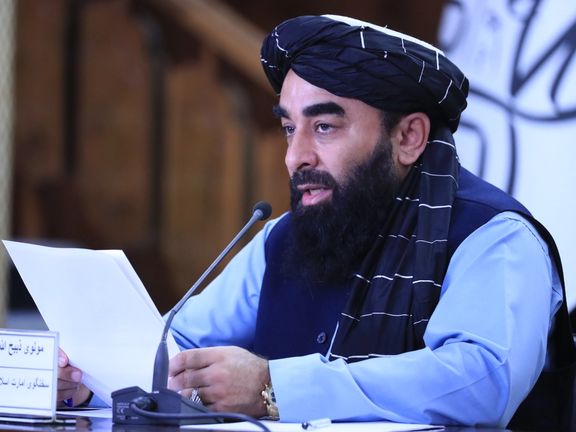
Mujahid said claims that the Taliban operates under Pakistan’s influence were the result of what he described as “20 years of propaganda”. He said the Pakistani military had expected the Taliban, after returning to power, to govern in line with Islamabad’s wishes.
He urged Pakistan to stop what he called “dreaming” of controlling the Taliban administration.
According to internal and international reports, many Taliban leaders and commanders lived in the Pakistani cities of Quetta and Peshawar during the two decades of war with the former Afghan government and US-led forces. Senior Pakistani officials, under pressure from Kabul and Washington, largely refrained from expelling Taliban figures, particularly members of the Haqqani network.
Analysts have long argued that Pakistan used the Taliban as a proxy force against the former Afghan government and India’s interests in Afghanistan.
Since returning to power, the Taliban have rejected Pakistan’s requests to expel fighters from Tehreek-e-Taliban Pakistan, or TTP, from Afghan territory. The group was responsible for one of the deadliest years for Pakistan’s military in 2025.
In an interview with journalist Mirwais Afghan published on Thursday, Mujahid addressed the causes of rising tensions and clashes between Pakistan and the Taliban administration. He accused Pakistan of fuelling instability in Afghanistan at the request of the United States.
Referring to remarks by Donald Trump about reclaiming Bagram Air Base, Mujahid said “a coordinated game is underway”, which he claimed was being driven by “a particular circle in Pakistan”.
He said those involved had “taken on the war project as a contract”. While Mujahid did not name individuals, he was referring to the Pakistani military leadership under Field Marshal Asim Munir, according to analysts.
Pakistan recorded its deadliest year in more than a decade in 2025, with at least 1,000 security incidents reported and about 4,000 deaths. TTP claimed responsibility for 3,573 attacks during the year, resulting in the deaths of 3,818 Pakistani security personnel, according to official figures.
Islamabad asked the Taliban to cooperate in preventing TTP attacks, but the request was rejected. After diplomatic efforts failed, Pakistan launched military strikes inside Afghanistan and began expelling millions of Afghan migrants. Taliban officials have said the pressure has not altered their position.
Struggle For Control
Mujahid said another source of tension was Pakistan’s alleged attempt to exercise full control over the Taliban government. He said the Taliban is not a Pakistani proxy and should not be treated as one.
He said that after returning to power, the Taliban established their own governing system and independently assumed control of Afghanistan’s internal and external affairs. This, he said, angered what he described as a “special circle” in Pakistan and led to what he called a conspiracy against the Taliban.
Mujahid said the Taliban is capable of defending itself but declined to provide details about its military capabilities, calling them “military secrets”.
He again rejected Pakistan’s accusations that the Taliban is sheltering TTP fighters, saying the group does not require sanctuary in Afghanistan. He said TTP maintains territory and military facilities inside Pakistan, referring to its members as “Waziristani migrants” who he claimed had been fully “contained”.