Dissident Commander Juma Khan Fateh Will Face Trial, Says Taliban

Taliban spokesman Zabihullah Mujahid told Afghanistan International on Saturday that Juma Khan Fateh, the group’s former Nusay district governor, will be put on trial.
Taliban spokesman Zabihullah Mujahid told Afghanistan International on Saturday that Juma Khan Fateh, the group’s former Nusay district governor, will be put on trial.
Mujahid said further details were not yet available because “the case and charges must first be prepared and then referred to the judicial authorities”.
Fateh surrendered after several days of fighting with the Taliban and was transferred from Badakhshan to Kabul on Monday, 17 August.
Fateh was a local Taliban commander and former deputy governor of Zabul. He commanded hundreds of armed men, and tensions between him and the Taliban administration had intensified in recent months before culminating in heavy fighting.
Following Fateh’s surrender, a Taliban delegation sent to Nusay asked residents to submit complaints and petitions concerning his conduct.
According to a local source, delegation members accused Fateh during meetings with residents of seizing people’s land and property and of “oppressing” local communities.
Taliban-affiliated media outlets have published videos showing large quantities of weapons and ammunition, claiming the arms were seized from men affiliated with Fateh.
Local sources say that, in addition to collecting hundreds of weapons from Fateh’s men, the Taliban also discovered several large arms depots in several areas across Nusay district.
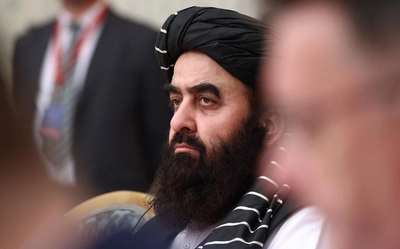
The Taliban Justice Ministry on Saturday announced the approval of a new police law that imposes further restrictions on public gatherings and expands police powers over detainees and suspects.
The document was published under the title “Shurta Law” (Police Law).
The law falls under the Interior Ministry and has been approved by Taliban leader Hibatullah Akhundzada.
It states that the Taliban police, are personnel who assist the security official, in security matters, follow his orders and enforce Taliban regulations related to security and public order.
Expanded Powers for Taliban Police
Under Article 50, “all demonstrations throughout Afghanistan” are prohibited. Clause four of Article 14 also bans photography or video recording during the implementation of punishments.
Article 27 increases the maximum period of detention to 10 days, compared with three days under previous regulations.
Article 41 grants police broader powers in dealing with suspects. Under this provision, police are required to warn suspects to fear God and not violate the rights of others. The second clause allows disciplinary measures and the use of harsh language.
Under the third clause, police can compel suspects to repent. The fourth clause allows police to threaten suspects accused of serious crimes with death.
The fifth clause also states that people who repeatedly commit serious crimes may be punished by police.
Police Duties
The document lists maintaining security and public order, protecting civilian airports and their facilities, preventing the possession of unauthorised weapons, and protecting the property and assets of the Afghan people among the main duties of the police.
According to the law, the Shurta or the police has several branches, including firefighting, disaster prevention, traffic police and public order units.
The document states that in border protection, the Shurta is responsible for monitoring people, vehicles and goods entering and leaving Afghanistan. It is also responsible for matters related to the security of civilian helicopter and aircraft flights.
In the traffic sector, police are responsible for regulating the movement of vehicles, issuing vehicle permits and driving licences, issuing number plates, and investigating traffic accidents and violations.
Narcotics
Clause four of Article 11 states that Shurta personnel must refrain from displaying large pictures of senior figures on their uniforms, vehicles or other equipment, and must prevent others from doing so.
The police are also required to prevent the cultivation, production, trafficking, sale and use of narcotics.
Article 12 states that the Shurta must prevent the cultivation of narcotics, opium, cannabis and other similar plants.
Under the law, police are responsible for gathering people addicted to drugs and referring them to treatment centres. They must also pursue and detain drug sellers, traffickers and distributors, and destroy seized drugs and related equipment.
The law also says the Shurta is responsible for preventing smuggling and kidnapping, and for pursuing and detaining kidnappers.
Under the law, police must observe “Islamic rulings” when arresting suspects, particularly women and children.
Clause four of Article 14 states that police must avoid actions that physically harm suspects during arrest.
According to the provision, without a Sharia court order, police must not beat a prisoner or suspect with sticks, whips or cables, or otherwise mistreat them. The Shurta is also prohibited from torturing ordinary and political prisoners.
The article also states that “no one has the right to take photographs or record video during the implementation of punishment”.
Issuing Visas to Foreign Nationals
One of the most significant provisions of the new law grants the Shurta authority to issue visas to foreign nationals.
The police are tasked with issuing passports to Afghan citizens and visas to foreign nationals intending to travel to Afghanistan.
The Shurta has also been instructed to cooperate with the Taliban’s Ministry for the Promotion of Virtue and Prevention of Vice to prevent the display of images at intersections and along roads.
Under Article 37, the police are authorised to use weapons, explosive materials and explosives to maintain security. The article says the Shurta may use weapons “during rebellion, armed crimes against security and armed conflict”.
Threats of Death
Article 41 states that security officials have the authority, in an effort to reform a suspect, to warn them to fear God regarding both the rights of God and the rights of other people.
Security officials may discipline suspects and address them using “angry” or harsh language.
Under the same article, Taliban security officials are authorised to “compel” suspects to repent.
Clause four of Article 41 states that security officials may “threaten with death” suspects accused of major crimes.
The law prohibits Shurta personnel from accepting gifts or attending “unusual gatherings”. Police are also barred from making improper remarks in the media and are not allowed to grow “long hair contrary to the Sunnah”.
Nawidullah Fitrat, a teacher in Kabul, accused the Taliban in a Facebook video on Friday of using religion to pursue ethnic objectives, saying the group’s true nature had become clear to the public.
In the video, which was broadcast live on his Facebook page, Fitrat said: “This may be my last video, but I will tell the truth before I die.”
He accused the Taliban of placing a religious mask over ethnic objectives and called on the group to “remove its religious mask” and “separate religion from politics”.
Fitrat said the Taliban had left no hope for the people of Afghanistan and that opportunities had disappeared since the group returned to power.
He also accused the Taliban of contributing to killings and destruction in Afghanistan during the years of war before its return to power. He said Afghans had eventually been given an opportunity to establish a representative government and lay down their weapons, but that the Taliban, during and after the war, had been responsible for the destruction of schools, universities, bridges and other infrastructure.
He described the Doha agreement between the Taliban and the United States as a disgraceful deal and said the Taliban’s return to power had once again destroyed people’s hopes and left no path for coexistence.
Fitrat said people had reached the end of their patience and that the Taliban’s conduct had driven young people away from religion and made them unwilling to listen to the group.
Addressing young Pashtuns, he urged them to work towards ending Taliban rule and to create what he called the last opportunity for coexistence with other ethnic groups.
He accused the Taliban of disrupting the social order and imposing an authoritarian system on Afghanistan.
Addressing the Taliban directly, Fitrat said: “You did not come to save religion; religion is only a slogan, while in practice your objectives are ethnic and racial.”
In another part of his remarks, he also called on religious scholars to take a stand against the Taliban’s conduct.
The video has been widely shared on social media in recent hours. Some users have also expressed concern about Fitrat’s safety.
However, Afghanistan International cannot independently verify Fitrat’s security situation or current whereabouts, and it remains unclear where he has been since publishing the video.
Taliban officials had not commented on the allegations made in the video by the time of publication.
Abdullah Khenjani, head of the National Resistance Front’s political office, says senior commander Hasib Panjshiri, recently killed in a Taliban ambush in northern Salang, had not left Afghanistan in the past five years.
Khenjani told Afghanistan International on Friday that during this period, Hasib Panjshiri had moved through different areas on both sides of the Hindu Kush, sometimes using mountain routes for faster movement and at other times travelling on public roads.
According to him, the commander had regularly published images from mountainous areas of the Hindu Kush, which the NRF spokesman said demonstrated that he had remained inside Afghanistan.
Taliban spokesman Zabihullah Mujahid confirmed to Afghanistan International on Thursday that Hasib Panjshiri had been killed while travelling through northern Salang.
Who Was Hasib Panjshiri?
Hasib Panjshiri, the 34-year-old son of Mohammad Asif Nezami, was born in Abdara village in Anaba district of Panjshir province. He had lived for many years in the Qoway Markaz area of Kabul.
The National Resistance Front says he had no fixed residence during the past five years and operated in different parts of Afghanistan.
According to the group, Hasib Panjshiri completed secondary school and later underwent officer training with Afghanistan’s National Directorate of Security. During the former republic, he served as commander of a rapid-response company within the NDS in Kabul.
His father had also served as a colonel in Afghanistan’s National Directorate of Security. Hasib Panjshiri was married and had five children.
The National Resistance Front of Afghanistan, led by Ahmad Massoud, is an armed opposition group fighting the Taliban and operates mainly in northern Afghanistan. The group says more than 1,000 of its fighters have been killed in clashes with the Taliban over the past five years.
No independent information has yet emerged about the details of the attack in northern Salang, the exact number of people killed or how the incident unfolded. The Taliban has also not provided verifiable details about the incident or the NRF’s claims.
A Commander Who Documented His Presence in Afghanistan
A review of Hasib Panjshiri’s activity on X shows that over the past several years he repeatedly posted images from mountainous areas of Afghanistan, saying he was in the foothills of the Hindu Kush.
Between 9 January 2023 and 6 June 2025, at least 10 photographs and videos were published on his account with captions referring to his presence in mountainous areas of the Hindu Kush.
He also appeared in several live media programmes, including an Instagram Live with Iranian documentary filmmaker Mohammad Hossein Jafarian, where he said he was inside Afghanistan. He also occasionally joined live discussions on X.
Hasib Panjshiri’s presence inside Afghanistan had previously been a matter of debate.
In late February 2023, Khoshal Sadat, a former deputy interior minister of Afghanistan, claimed during an audio discussion on X that Hasib Panjshiri was not in Afghanistan. Hasib responded by challenging him to publish a video showing his own location.
He also released video messages from mountainous areas on occasions such as Eid, saying he remained inside Afghanistan to continue fighting the Taliban.
Both during the past five years and after his death, the Taliban sought to cast doubt on his presence in Afghanistan. His supporters, however, say his death in northern Salang confirmed his claim that he had continued his resistance from inside the country.
From Fighting to His Death in Salang
Hasib Panjshiri was killed in an ambush by Taliban forces on Thursday, 20 August, while travelling through northern Salang. The Taliban and accounts close to the group later circulated images of his body on social media.
One of the videos showed degrading treatment of his body. A similar video had previously emerged showing Taliban fighters mistreating the bodies of men affiliated with Juma Khan Fateh in Darwaz.
Asked about the issue, Taliban spokesman Zabihullah Mujahid told Afghanistan International that the fighters had become “emotional” and were not aware of their behaviour.
The circulation of the images prompted reactions on social media, with some users comparing them with Hasib Panjshiri’s treatment of Taliban prisoners.
In a video released in August 2022, Hasib Panjshiri was seen among a group of Taliban prisoners. In the footage, he gave the prisoners spending money before they were released.
At the time, the National Resistance Front said it had released 45 Taliban prisoners in Panjshir. Images from the event showed Hasib Panjshiri among those involved in their release.
‘I Fight for Afghanistan’s Freedom’
In his messages, Hasib Panjshiri said he was fighting for the freedom of Afghanistan and repeatedly stressed that “freedom requires sacrifice”.
He also supported the reopening of girls’ schools and women’s rights, describing these issues as among the reasons he continued his fight against the Taliban.
The Taliban has consistently denied the existence of a widespread armed resistance against its rule in Afghanistan, but the National Resistance Front says its forces have fought the Taliban in different parts of the country over the past several years.
The group claims it has lost more than 1,000 fighters in clashes with the Taliban during the past five years, a figure that cannot be independently verified.
According to published reports, Hasib Panjshiri had also taken part in several operations against the Taliban before his death.
On 17 June 2022, his name appeared alongside Khalid Amiri in reports about an NRF operation to shoot down a Taliban helicopter in Panjshir.
Hasib Panjshiri’s death in Salang has again raised questions about the extent to which armed Taliban opponents remain present and able to move inside Afghanistan, an issue the Taliban has consistently downplayed or denied, while armed opposition groups insist they continue to operate inside the country.
Taliban intelligence-linked media pages on Friday released a new audio recording they attributed to dissident Taliban commander Juma Khan Fateh, claiming he discussed receiving weapons and financial support with a member of the Afghanistan Freedom Front.
Hejaz News, a propaganda outlet linked to Taliban intelligence, published the recording under the headline uncovering Juma Khan Fateh contact with the Freedom Front.
The outlet claimed that the person speaking with Fateh was a senior member of the Afghanistan Freedom Front and had promised him financial and military assistance.
The Freedom Front, however, rejected the claim. A member of the group’s leadership told Afghanistan International that the conversation had no connection to the Freedom Front. He alleged that the other voice in the recording belonged to a Taliban intelligence operative.
The Freedom Front claimed that the individual had operated under the alias “Shaheen Asmayee” and had been tasked with identifying former security personnel and people linked to anti-Taliban groups.
The source described the release of the recording as “fabricated” and part of a “psychological warfare” campaign by Taliban intelligence against its opponents.
However, the authenticity of the audio and the identity of the person speaking with Fateh cannot be independently verified. It is also unclear when, where or under what circumstances the conversation was recorded.
An Attempt to Change the Narrative?
The recording was released after Fateh had insisted during his recent confrontation with the Taliban in Darwaz that he did not oppose the “Islamic Emirate” and that his main dispute was over the presence of Taliban intelligence special forces in the area.
By publishing the new audio, Hejaz News has sought to challenge that account and portray it as evidence of Fateh’s links with armed Taliban opponents.
In recent days, Taliban intelligence-linked pages have also levelled several allegations against Fateh, including extorting gold mines, drug trafficking, transferring extremist fighters, killing Taliban personnel, receiving support from foreign intelligence agencies and attempting to destabilise the region.
These allegations have not been independently verified, and it is unclear whether a formal judicial case has been opened against Fateh on the basis of the claims.
Fateh’s Whereabouts Remain Unknown
Juma Khan Fateh left his positions in Nusay district of Badakhshan on Monday, 17 August, after about a week of fighting with Taliban forces and was transferred to Faizabad following talks with Taliban army chief of staff Fasihuddin Fitrat.
Sources close to Fateh had previously said he agreed to end the fighting after receiving guarantees for his safety and that of his men. The Taliban, however, described the development as his “surrender”.
Since Fateh was transferred to Faizabad, no independent information has emerged about where he is being held or his current condition.
The release of the new audio recording, alongside the series of allegations against him, has raised the possibility that Fateh’s case could shift from an internal Taliban dispute into a security and judicial matter.
However, until independent evidence emerges regarding the authenticity of the recording, the circumstances in which it was made and the allegations against him, the claims cannot be regarded as verified.
Former Afghan President Hamid Karzai says Taliban recognition and legitimacy depend on meeting specific conditions, including allowing girls to return to school and women to work.
Speaking to Bloomberg on Friday, 21 August, Karzai said the international community and the United Nations had repeatedly called on the Taliban to lift restrictions imposed on women and girls.
He stressed that the Taliban must allow girls to return to school and women to resume work if it wants to gain legitimacy and international recognition.
Karzai said this was not merely his personal position, but a demand repeatedly raised by the international community and the United Nations.
Asked whether he supported beginning a process of normalising relations with the Taliban under the current circumstances, Karzai said he wanted a process in which Afghans could come together and find a solution for the country’s future, one in which all people felt included, had a sense of belonging and enjoyed their rights.
He said the goal should be to build a country in which all Afghans could live, work and make progress towards their future inside Afghanistan.
Russia is the only country to have formally recognised the Taliban administration. The international community and regional countries have set conditions for recognition, including respect for human rights, the formation of an inclusive government involving ethnic groups and women, counter-terrorism measures and compliance with international obligations.
The Taliban has rejected these demands, describing them as interference in Afghanistan’s internal affairs.
Karzai said in another part of the interview that he remained in contact with several Taliban leaders and had discussed with them the importance of girls’ education and women returning to work.
He said some Taliban officials who met him understood the importance of the issue and agreed with his position.
The former Afghan president also said that despite the ban on girls’ education beyond the sixth grade and sweeping restrictions on women’s employment, he was not willing to send his daughters abroad to continue their education.
He added that, as an Afghan citizen, he felt responsible for working to create conditions in which girls could study inside the country.
Karzai said sending his daughters abroad for education would amount to accepting the current situation, something he said he would never do.